
Links Between Food Security, Violence and Migration in North Triangle of Central America
|
|
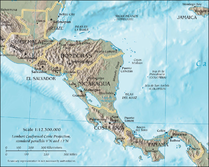
Millions of Central Americans live outside their countries, with 80 percent of them living in the United States, according to new research into the connections between food insecurity, violence, and migration in the region. El Salvador alone has the highest percentage of its population living outside the country’s borders at over 18 percent, the research shows. Further, during the period 2011-2013, the number of unaccompanied minors entering the United States from El Salvador increased by 330 percent. Worse, that number reached 593 percent for unaccompanied minors coming from Honduras. In a report, Hunger Without Borders: The hidden links between food insecurity, violence and migration in the Northern Triangle of Central America, coordinated by the World Food Program (WFP), researchers found that migration in Central America can be a highly lucrative phenomenon. Unaccompanied minors gained notable momentum in recent years, becoming the “new form” of the irregular business of migration, according to the Ministry of Social Development in Guatemala. The new research has shown that with the perception that minors have a greater chance of being granted asylum than adults, coyotes – smugglers — have been increasingly promoting it as a way to regularize migration of parents as well. The report is a compilation of two studies conducted by the International Organization for Migration (IOM) and the Department of International Development at the London School of Economics and Political Science (LSE). Both focus on the correlation between two push factors – food insecurity and violence – and migration in El Salvador, Guatemala and Honduras. It is the first report that combined these three variables in one analysis. Main findings: Existence of positive correlation between food insecurity and migration in the three countries considered: the higher the food insecurity, the greater the chances that people migrate in search of better conditions.
KJ |