
Immigrant of the Day: Harry Bridges
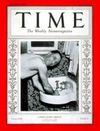 Harry Bridges (1901–1990) was an influential American labor leader in the International Longshore and Warehouse Union (ILWU), based on the West Coast, which he helped form and led for over forty years. As controversial as he was charismatic, Bridges was prosecuted by the administrations of Presidents Roosevelt, Truman and Eisenhower.
Born in Melbourne, Australia as Alfred Renton Bridges, Bridges went to sea at age sixteen as a merchant seaman, joining the Australian sailors’ union. He took the name Harry from his beloved Uncle Harry. Bridges entered the United States in 1920 and became a naturalized citizen in 1945.
In 1921, Bridges joined the Industrial Workers of the World, participating in an unsuccessful nationwide seamen’s strike. Bridges early experiences in the IWW and in Australian unions would influence his beliefs on militant unionism based on rank and file power and involvement. In 1922, Bridges left the sea for longshore work in San Francisco. The rest is labor history. See generally Charles P. Larrowe, Harry Bridges: The Rise and Fall of Radical Labor in the United States (1972) (describing Bridges’s labor career).
The Roosevelt administration attempted to deport Bridges in 1938 on the grounds that he was a member of the Communist Party. The immigration judge ruled that the government had failed to prove its case. The government made a second effort to deport Bridges in 1941. In this case the immigration judge found that the evidence supported the charges against Bridges, but the Board of Immigration Appeals reversed him. The Attorney General, Francis Biddle, overruled the Board, only to be reversed in turn in 1945 by the Supreme Court, which found the evidence to be insufficient as a matter of law. Bridges v. Wixon, 326 U.S. 135 (1945). In a surprisingly candid concurring opinion, Justice Murphy captured the essence of the government’s persistent efforts to deport Bridges:
The record in this case will stand forever as a monument to man’s intolerance of man. Seldom if ever in the history of this nation has there been such a concentrated and relentless crusade to deport an individual because he dared to exercise the freedom that … is guaranteed to him by the Constitution… For more than a decade powerful economic and social forces have combined with public and private agencies to seek the deportation of Harry Bridges…
Id. at 157 (Murphy, J. concurring). Next, in 1948 the federal government tried Bridges for perjuring himself when he stated in his application for naturalization that he was not a member of the Communist Party. The jury convicted Bridges; the Supreme Court overturned the conviction in 1953. See Bridges v. United States, 346 U.S. 209 (1953). The United States government later attempted unsuccessfully to denaturalize Bridges because of his alleged Communist Party membership. See United States v. Bridges, 133 F. Supp. 638, 643 (N.D. Cal. 1955) (holding that government failed to establish by clear and convincing evidence that Bridges had been member of Communist Party at time of naturalization or at any time during preceding 10 years). The government did not appeal. A chronology of the efforts of the U.S. government to rid itself of Bridges can be found in Appendix A to United States v. Bridges, 133 F. Supp. 638, 644 (N.D. Cal. 1955).
On July 2001, Harry’s 100th birthday, was declared “Harry Bridges Day” by the Governor of California; on the same day the City of San Francisco dedicated a plaza in honor of Harry Bridges. “From Wharf Rats to Lords of the Docks”, a film, brings Harry Bridges to life. The Harry Bridges Project, a nonprofit organization, produced the film. The Project was created to promote the legacy of the labor leader and to aid in the public’s understanding of his importance to history.
KJ