
Immigration at Center Stage at the AALS Annual Meeting
 The Association of American Law Schools (AALS) annual meeting in New York City concluded yesterday. Appropriately, given the national ferment on the issue, the annual meeting included a wealth of programs on many of the burning immigration issues of the day.
The Workshop on “Local Government at Risk: Immigration, Land Use, National Security and the Battle for Control,” provided a full day of programs on Thursday, many of which touched on the efficacy of the spate of state (e.g., Arizona, Oklahoma, etc.) and local (Escondido, CA, Farmer’s Branch, Texas, Hazleton, PA, Prince William County, VA, etc.) efforts to effectively regulate immigation by punishing immigrants. Participants on a panel on “Cooperative or Clashing Federalism” included F. Michael Higginbotham (Baltimore), David Barron (Harvard), Jamin Raskin (American), and Natsu Saito (Georgia State). An “Immigration Federalism” panel, with Orde F. Kittrie (Arizona State University), Michael A. Olivas (Houston), and Peter J. Spiro (Temple), thoughtfully discussed the role of state and local governments in immigration regulation. Professors Olivas and Spiro offered contrasting views about federal preemption of state and local immigration laws. Professor Kittrie offered some important insights about the new Arizona state employer sanctions law — including some troubling civil rights implications — that went into effect on January 1. The “Crimmigration” panel — Raquel E. Aldana (University of Nevada, Las Vegas), Jennifer Chacón (UC Davis), and Juliet P. Stumpf (Lewis and Clark) — allowed three important scholars in the field to offer their insights on the criminalization of immigration law at the federal, state, and local levels. The final panel “Local Governments: Caught in the Middle” moderated by this blogger closed the day with two contrasting views about the roles of state and local governments in immigration regulation, with Clare Huntington (Colorado) seeing more room for lawful state and local action and Michael Wishnie (Yale) contending that there was much less room. One interesting sidebar occurred in the Q&A about whether anti-immigrant sentiment influenced passage of some of the state and local laws, with starkly contrasting opinions from professors from Arizona and California (Cruz Reynoso). Kudos to my wonderful colleague Keith Aoki (UC Davis), the chair of the planning committee, and the entire committee, which put this timely and intellectually rigorous program together.
The Section on Immigration Law once again put on a stellar program: “Alive at Twenty-Five?: The Many Meanings of Plyler v. Doe” with Hiroshi Motomura (North Carolina), Linda S. Bosniak (Rutgers-Camden), Douglas S. Massey (Sociology, Princeton), Michael A. Olivas (Houston), and Peter H. Schuck (Yale). This panel offered a variety of interresting perspectives on Plyler v. Doe (1982), the much-maligned Supreme Court 5-4 decision ensuring the access of undocumented children to the public schools. Somewhat surprisingly, there were no real fireworks on this panel, even though the panelists previously had published articles with contrasting views of the Court decision. Interestingly, the only non-law professor on the panel, Doug Massey, who has done some important work on the demographics of the undocumented population in the United States, seemed to be most critical of U.S. immigration law and enforcement. Perhaps the immigration law profs are too familiar with the harshness of the immigration laws!
One of the Open Source Programs (relatively new programs competitively selected by the AALS), was entitled “Conflict and Solidarity: Understanding the Relationship Between African Americans and New Immigrants.” Participants included Robin A. Lenhardt (Fordham), Muneer I. Ahmad (American), Jennifer Gordon (Fordham), Kevin R. Johnson (UC Davis), and Rachel Moran (UC Berkeley). Professors Gordon and Lenhardt organized the panel in an effort to bring together scholars knowledgeable on immigration law, constitutional law, labor law, and Critical Race Theory to analyze African American/immigrant conflict. The panelists offered a variety of fascinating perspectives on the conflict between immigrant communities and the established African American community in places as different as New Orleans and Washington, D.C.
In conjunction with teh AALS annual meeting, the Society of American Law Teachers (SALT) held the annual SALT Robert Cover Workshop. This year’s workshop was entitled “Humanizing the Consequences of Recent Immigration Law and Policy Initiatives: Raids, Detentions, and the Need to Protect Human Rights.” Presenters included Raquel Aldana (University of Nevada, Las Vegas), Steven Bender (Oregon), Leticia Saucedo (University of Nevada, Las Vegas), Bill Hing (UC Davis), Ruben Garcia (California Western), and Sameer M. Ashar (CUNY). This panel was especially timely given the focus over the last year of the Bush administration on immigration enforcement, a move supported by most of the Presidential candidates (who emphasize immigration enforcement over all else in immigration law). Moreover, all of us need to remember that real human beings — not faceless “illegal aliens” or “aliens” — are affected by harsh immigration laws and policies.
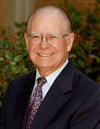 Last but not least, the Latina/o law professors at their annual dinner, organized by Christopher David Ruiz Cameron (Southwestern), honored Professor (and former California Associate Justice) Cruz Reynoso (UC Davis) upon his retirement from law teaching. For decades, Professor Reynoso has been involved in immigration issues and immigration reform and, in 2000, was honored by President Bill Clinton with the Presidential Medal of Freedom.
KJ