
Immigrant of the Day: Joseph Brodsky (USSR)
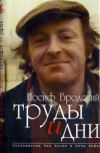 Joseph Brodsky (1940–1996), born Iosif Aleksandrovich Brodsky, was a Russian poet and essayist who won the Nobel Prize in Literature (1987) and was chosen Poet Laureate of the United States (1991-92). Brodsky was born in Leningrad and survived the Siege of Leningrad.
In 1963, Brodsky was arrested and in 1964 charged with parasitism by the Soviet authorities and sentenced to five years of internal exile with 18 months of labor. The sentence was commuted in 1965 after prominent Soviet and foreign literary figures, including Jean Paul Sartre, protested. In 1964, Leonid Brezhnev came to power. Brodsky refused to publish his writings censored and most of his work has appeared only in the West.
On June 4, 1972 Brodsky was expelled from the USSR. He became a U.S. citizen in 1977. His first teaching position in the United States was at the University of Michigan. He was Poet-in-Residence and Visiting Professor at Queens College, Smith College, Columbia University, and the Cambridge University in England. He was a Five-College Professor of Literature at Mount Holyoke College. Brodsky achieved major successes in his career as an English language poet and essayist.
In 1978, Brodsky was awarded an honorary degree of Doctor of Letters at Yale University, and in 1979, he was inducted as a member of the American Academy and Institute of Arts and Letters. In 1981, Brodsky received the John D. and Catherine T. MacArthur Foundation’s “genius” award. In 1986, his collection of essays Less Than One won the National Book Critic’s Award for Criticism. In 1987, Brodsky won the Nobel Prize for Literature, being the fifth Russian-born writer to do so.
In 1991, Brodsky became Poet Laureate of the United States. His inauguration address was printed in Poetry Review.
KJ