
From the Book Shelves: The Warmth of Other Suns: The Epic Story of America’s Great Migration
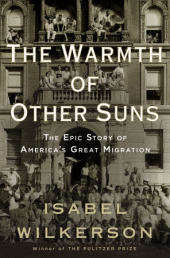
In The Warmth of Other Suns, Pulitzer Prize–winning author Isabel Wilkerson chronicles the decades-long migration of black citizens who fled the South for northern and western cities, in search of a better life. From 1915 to 1970, this exodus of almost six million people changed the face of America. Wilkerson compares this epic migration to the migrations of other peoples in history. She interviewed more than a thousand people, and gained access to new data and official records, to write this account of how these American journeys unfolded, altering our cities, our country, and ourselves. Wilkerson tells this story through the lives of three unique individuals: Ida Mae Gladney, who in 1937 left sharecropping and prejudice in Mississippi for Chicago, where she achieved quiet blue-collar success and, in old age, voted for Barack Obama when he ran for an Illinois Senate seat; sharp and quick-tempered George Starling, who in 1945 fled Florida for Harlem, where he endangered his job fighting for civil rights, saw his family fall, and finally found peace in God; and Robert Foster, who left Louisiana in 1953 to pursue a medical career, the personal physician to Ray Charles as part of a successful medical career. Wilkerson brilliantly captures their first treacherous and exhausting cross-country trips by car and train and their new lives in colonies that grew into ghettos, as well as how they changed these cities with southern food, faith, and culture and improved them with discipline, drive, and hard work.
Here is a telling passage from one of the early chapters of the book:
“From the early years of the twentieth century to well past its middle age, nearly every black family in the American South, which meant nearly every black family in America, had a decision to make. There were sharecroppes losing at settlement. Typists wanting to work in an office. Yard boys scared that a single gesture near the planter’s wife could leave them hanging from an oak tree. They were all stuck in a caste system as hard and unyielding as the red Georgia clay, and they each had a decision before them. In this, they were not unlike anyone who ever longed to cross the Atlantic or the Rio Grande.” (emphasis added).
For the N.Y Times review of the book, click here.
KJ