
Rev. Dr. Elizabeth Conde-Frazier’s new book: Listen to the Children: Conversations with Immigrant Families/ Escuchemos a los ninos: Conversaciones con familias inmigrantes
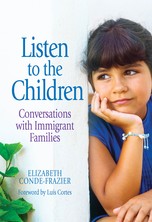
Rev. Dr. Elizabeth Conde-Frazier is “touring” on blogs about her new book:
Immigration reform is a difficult topic for many Americans. They would like to see immigration as a black and white issue with clear right and wrong answers, but as is so often the case with matters of great human significance, the reality is much more complicated. I have worked with immigrants in the Hispanic community for over thirty years, and I find it tremendously significant that one of every five children in the United States lives in an immigrant family, that the majority of these children will become life-time residents of the U.S., and that their presence will affect the basic institutions of our society.
In my bilingual book Listen to the Children: Conversations with Immigrant Families/ Escuchemos a los ninos: Conversaciones con familias inmigrantes, I address issues of status, identity, and justice. These issues become even more urgent for policy advocates, community organizers, clergy, and members of the legal profession when we acknowledge the ways in which our legal and enforcement systems’ approach to undocumented parents results in catastrophically damaging consequences for their children – that is, these same children who as adults will continue to impact our society for the long term.
Children often suffer incredible physical and emotional trauma when they accompany their undocumented parents in the perilous crossing to this country. They, and those born in the US to undocumented parents, continue to suffer in the uncertainty of their status, the inhumane labor conditions their parents work in, the discrimination and torment they face at schools, and in the constant fear of being deported or separated from their families. Unfortunately, our legal system and the systems of enforcement only exacerbate these problems.
Worksite raids have already torn thousands of families apart in violent ways, and other enforcement policies, such as 287(g) and Secure Communities, continue to do the same. The lengths of time that parents can spend in detention centers, apart from their children and unable to contact family or legal representation, is inhumane and immoral in a society that outspokenly supports civil and human rights in other settings. Laws like Arizona’s SB1070 that result in racial profiling and inflame nativist sentiments will only increase the fear and stress these children live with every day. These children are a significant part of the future of our country and we must intervene to advocate against unjust enforcement practices whenever and wherever possible.
The impact these conditions have on the long-term development of children is enormous. It has been demonstrated that because of the stressful conditions of their lives, children with undocumented parents often have higher rates of absenteeism and lower test scores in school. They are more likely to drop out of school to help support their families financially. If their parents are deported, many children who themselves are US citizens, end up returning with their parents to live in conditions of extreme poverty and without the basic nutrition, education, and other opportunities they should be receiving as rightful citizens of our country.
It is my hope that by listening to their stories up close and personal, and by seeing the persons behind the numbers and the news headlines, we will be challenged to advocate against unjust practices in our legal and enforcement systems with renewed commitment.
Rev. Dr. Elizabeth Conde-Frazier is dean of Esperanza College at Eastern University in St. Davids, Pennsylvania. Her new book, Listen to the Children: Conversations with Immigrant Families/ Escuchemos a los ninos: Conversaciones con familias inmigrantes, invites the reader to eavesdrop on fictionalized conversations between immigrant parents, their children, and their caregivers, offering insight into their emotions, perceptions, and realities.
KJ