
Blogging from Vietnam – Part 1
Friends,
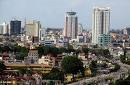
I arrived in Hanoi yesterday. I’m in Vietnam for several days accompanying a group of University of San Francisco law students who will be working here this summer. I’ll take advantage of the opportunity to do some blogging from here.
In 1975 when the United States withdrew its troops from Vietnam, the number of Vietnamese Americans was negligible. However, the 2010 census will likely reveal that the current Vietnamese American population is about 1.7 million. That’s amazing growth, and refugee policy has everything to do with that.
Vietnamese Americans have made themselves noticeable by contributing to the revitalization of various urban centers—think Orange County, the San Jose area, New Orleans, and Dallas. Their food enriches the cuisine of many cities. They have also been made conspicuous by the media—sometimes for the educational accomplishments of the children, sometimes for the economic threat they are perceived as posing to white fishermen, sometimes for their experiences as victims of anti-Asian hate crime, and sometimes as gang members.
For all this newfound prominence, the presence and growth of Vietnamese America does not obviously translate into much that is revealing about immigration law and policy. After all, Vietnamese came to the U.S. as part of our involvement in the war, mostly through refugee rather than immigration categories. Refugee law and policy has historically been understood by scholars and policymakers as importantly distinct from immigration law and policy. It expresses, we are told, the national community’s need to make ad hoc judgments in response to its humanitarian sensibilities. Conventional immigration law and policy, by contrast, reflect judgments about growth in light of political, social, and economic concerns. In effect we are asked to believe that whatever might appear noteworthy about Vietnamese Americans and how they got here is largely separable from the experiences of other Asian immigrants.
But what we know about other Asian American groups, particularly Chinese, Japanese, South Asians, invite a closer look at largely unexamined facets of refugee policy. Attention should be focused on the likelihood of multiple national agendas, the hidden continuities between refugee and admissions laws and policies, the reassertion of familiar instruments of control,, and the superficiality of our understanding of the Vietnamese.
I’ll come back to these themes in my next Vietnam blog. For now, let me say that arriving in Hanoi yesterday was eye-opening. The vibrancy of the city is overwhelming. The people are full of energy. The streets are crowded, the smells are good. There is life.
bh