
Blogging from Vietnam — Part 5
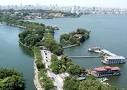
As I was in a cab to the airport in Ho Chi Minh City to return to Hanoi, we passed by several parks filled with families doing typical things that one might on a Sunday afternoon in many U.S. cities. The difference was the density—so many folks enjoying the time with their families. After arriving in Hanoi, I saw the same phenomena. Near my hotel, which is near Westlake and several park areas, families were buying balloons, popcorn, ice cream; others rented swan-like paddle boats. The importance of family was striking.
When Vietnamese and other Southeast Asian refugees began arriving in the U.S. in 1975, dispersal was the goal. But policymakers soon discovered that dispersal was ill-advised and unpopular. Initially, the program produced settlement patterns approximating that of the rest of the population. Refugees were “neatly” dispersed around the country, with 21% being placed in California. At least one hundred were relocated in every state except Alaska. Relative isolation, however, quickly proved unacceptable to refugees who began moving from their assigned locations in substantial numbers, a practice commonly referred to as secondary migration.
While many factors contributed to refugees’ decision to resettle, secondary migration principally resulted from poor policy decisions based upon superficial analysis. In a new and often hostile land, forced dispersal deprived Southeast Asians of desperately needed familial, cultural, and ethnic support. Their desire to develop these support systems seemed possible only by forming the kinds of ethnic enclaves that dispersal discouraged. So Vietnamese leaders, particularly the clergy, frequently coordinated ambitious secondary migration to places like New Orleans, where living together as a community seemed feasible.
By 1980, 45% of the first wave of Southeast Asian refugees had moved from their assigned locations to a different state. They became concentrated most heavily in California, Texas, and Louisiana. Urban areas having warm climates and an Asian population were preferred. Thus, by the time the second wave of refugees began arriving in 1978, Southeast Asian refugees, particularly the Vietnamese, were no longer as widely dispersed as they had been under the original plan.
bh