
Guest Blog Post: Scott Titshaw on United States v. Windsor and Immigration Law
Our fifth post on the impact of United States v. Windsor on immigration law is by Scott Titshaw, Associate Professor of Law at Mercer Law School. (The previous posts (first through fourth) may be found here).
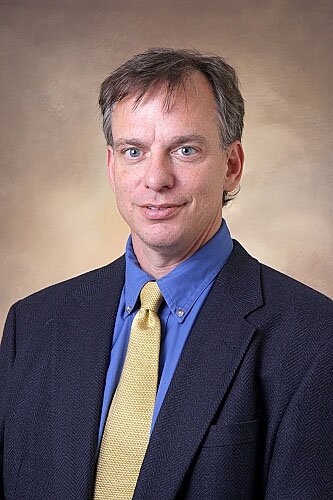
“During twelve years as an immigrationpractitioner, some of my most painful conversations were with US Citizens andtheir foreign national same-sex partners whose relationships were invisible forimmigration purposes. The lucky onescould move together to Canada or another country that recognized theirrelationship. For others, the onlychoice was separation or living in the United States withoutauthorization. Fortunately, United States v. Windsor has changed allthat, and same-sex spouses will now be recognized under the INA in the sameways as different-sex spouses, including stepparent relationships, relief fromremoval, dependent status, and waivers of bars to admission, as well as themore obvious marriage-based immigrant visa petitions.
Justice Kennedy’s opinion in Windsor held it unconstitutional to denyfederal recognition to spouses with valid marriages under state law. Yet it does not expressly clarify which state law. How about same-sex spouses with validmarriages from one jurisdiction, who live in one of the thirty-three statesthat refuse to recognize their marriage?
This second-order choice-of-law question wasthe focus of the DHS FAQ providing initial post-Windsorguidance. Unfortunately, the FAQ sentmixed signals. It clarified that USCitizens can file immigrant visa petitions on behalf of their same-sex foreignspouses and that “as a general matter,USCIS looks to the law of the place where the marriage took place whendetermining whether it is valid for immigration purposes.” (emphasisadded) Then if proceeded to muddy thewaters again with a disclaimer that this “general rule is subject to somelimited exceptions under which federal immigration agencies historically haveconsidered the law of the state of residence in addition to the law of thestate of celebration of the marriage.” Recognizing that this fudging was unlikely to satisfy people whose familiesare at stake, the FAQ concluded: “If necessary, we may provide further guidanceon this question going forward.” Hopefully,that guidance is forthcoming.
The USCIS FAQ is unclear enough to causeprudent people to wait for further guidance before filing cases where a denialcould have harmful consequences (e.g., a US Citizen in North Carolina and theforeign national wife she married in New York, who has overstayed hernonimmigrant status by several years.) Yet, in the end, I expect the administration to recognize a uniformplace-of-celebration rule for same-sex marriages under the INA.
From the President on down, the Obamaadministration has signaled its willingness to recognize all same-sex marriages valid in the jurisdictions where they arecelebrated. While on a visit to Senegal,President Obama stated in a joint conference, “It’s my personal belief — butI’m speaking now as a President as opposed to as a lawyer — that if you’ve beenmarried in Massachusetts and you move someplace else, you’re still married, andthat under federal law you should be able to obtain the benefits of anylawfully married couple.” Despite thequalification that he was only speaking as the chief executive of the UnitedStates, the President’s sentiment seems clear. Fortunately, the law is also clear on his authority to actualize thissentiment.
Four years ago, I analyzed over one-hundredBIA, Attorney General and federal court decisions regarding the recognition ofmarriages that were not valid in all US jurisdictions. SeeScott Titshaw, The Meaning of Marriage:Immigration Rules and Their Implications for Same-Sex Spouses in a WorldWithout DOMA, 16 Wm. & Mary J. Women& L. 537 (2010). At that time, I was generallyassuming a worst-case political scenario and attempting to define what apost-DOMA administration would be required to do to conform with the precedentsset in regard to biracial marriages, marriages involving close relatives, marriageinvolving minors, marriage involving transgender spouses, proxy marriages,polygamy and pre-DOMA same-sex marriages. My conclusion was that bona fide marriagesvalid where celebrated are valid under the INA so long as they are not subjectto strongly held federal or state public policy objections. The federal public policy objections embodiedin DOMA Section 3, and in the federal bar on lesbian and gay male admissibilitybefore it, are now history. However,state objections may still create confusion.
The BIA has refused to recognize validmarriages in some cases where the spouses’ state of domicile enforces criminalprohibitions of the couples cohabitation or evasion of state law. Id. However, such criminalprosecutions of same-sex spouses would clearly run afoul of the Supreme Court’sholding in Lawrence v. Texas as wellas the egalitarian and dignitarian strands of the opinion in United States v. Windsor.
The Obama administration recently adopted theplace-of-celebration rule with no apparent exception in its guidance onmarriages involving transgender spouses. Before Windsor, the federal validity of these marriages hinged on their validity as different-sex marriages under statelaw. In that context USCIS focusedentirely on the place of celebration to the extent that it provided fiancé(e)petitioners indicating a specific intent to marry in a jurisdiction where themarriage would not be valid “the opportunity to submit . . . an affidavitattesting that the intended marriage will take place in a jurisdiction where”it will be valid for immigration purposes. AFM 21.3(a)(2)(J)
Probably the best evidence of theplace-of-celebration rule is what DHS is actually doing. In fact, USCIS has already begun approvingpetitions for same-sex couples validly married in states like New York andIowa, who live in states with anti-gay-marriage constitutional amendments likeColorado and Florida.
So why is DHS sowing doubt with its FAQ? My best guess is that they are awaitingsign-off by the Department of Justice: In his initial statement praising the Windsor decision, President Obama said in a statement that he had “directed the Attorney General to work with other members of [his]. . . Cabinet to review all relevant federal statutes to ensure this decision .. . is implemented swiftly and smoothly.” Time and experience willtell. But hopefully additional guidancewill clarify a universal place-of-celebration rule and security sooner ratherthan later.”
RCV