
Innovations in Immigration Law Teaching and Lawyering (Series): Talia Inlender on Immigration Detention Advocacy and Franco v. Holder
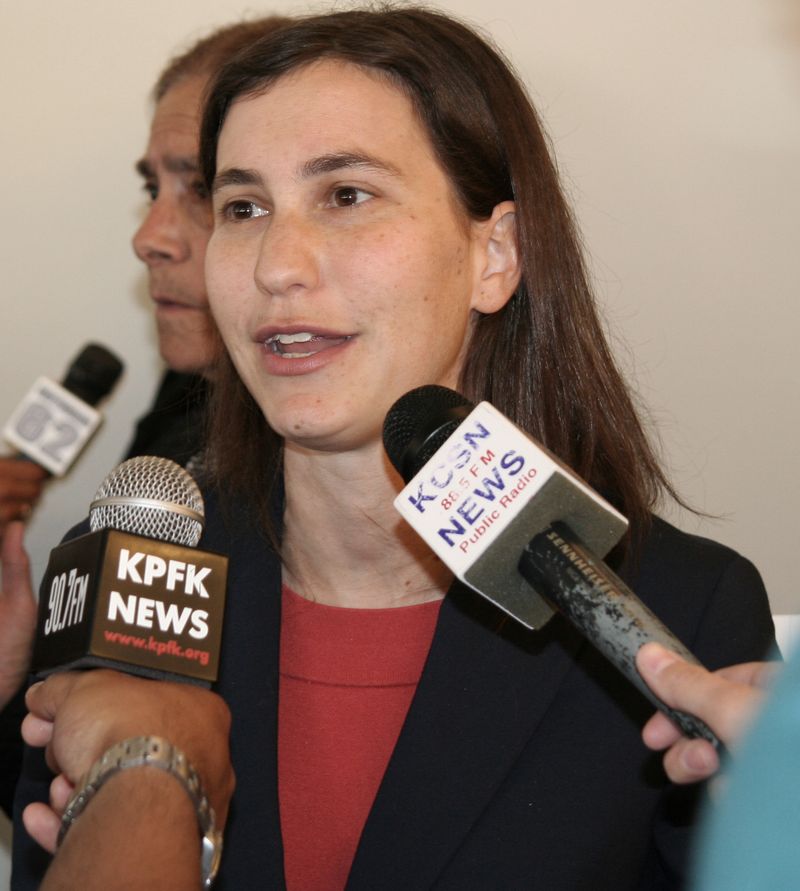
This post features the work of Talia Inlender, Staff Attorney at Public Counsel in Los Angeles, California, and her advocacy on behalf of detained immigrants. Ms. Inlender — along with attorneys from the ACLU Foundation of Southern California, Sullivan & Cromwell LLP, Northwest Immigrant Rights Project, Mental Health Advocacy Services, the ACLU Immigrants’ Rights Project, the ACLU of San Diego and Imperial Counties, and the ACLU of Arizona — litigated Franco v. Holder, a class-action lawsuit filed in 2010 in the Central District of California on behalf of detained immigrants with mental incompetencies in the Ninth Circuit that has expanded access to legal counsel for a particularly vulnerable class of detainees. In 2013, the Court ordered the government to provide counsel to class members, immigrant detainees with serious mental disabilities who faced deportation and were unable to adequately represent themselves in removal proceedings. And just last month, U.S. District Court Judge Dolly M. Gee granted final approval of the parties’ settlement agreement in Franco, which may allow certain noncitizens with serious mental disabilities to request to reopen their cases and possibly return to the U.S. to fight their removal cases.
- 1. Tell us about how you first got involved in advocacy related to immigration detention and individuals with mental disabilities.
As a law student, I got my first taste for this work trying to obtain a U visa certification for a detained immigrant in Connecticut. She was deported before we were able to get the certification. It was devastating. But it showed me first-hand the high stakes involved in detention work, and the great need for legal services among this vulnerable population. After law school, I was awarded an Equal Justice Works fellowship to provide and expand access to detained immigrants in the Los Angeles area. That two-year fellowship turned into a Staff Attorney position in the Immigrants’ Rights Project at Public Counsel, where I continue to run our agency’s work on behalf of detained immigrants. I did not set out specifically to work with individuals with mental illness, but the sad fact is that the immigration detention system – like the criminal detention system – houses a large number of people who struggle with mental health issues. It’s nearly impossible to do detention work and not encounter clients with serious mental health issues who need assistance.
- 2. How did you meet Jose Antonio Franco, the lead plaintiff in the Franco litigation?
I met Jose Antonio Franco through my work at the Santa Ana City Jail, an immigration detention center located south of Los Angeles. I had been providing weekly legal orientations, pro per assistance and in some cases direct representation to detainees in Santa Ana for a year before I met Mr. Franco. Although he had been there that whole time, he was not capable of writing his name on the sign-up sheet for the legal orientation because of his cognitive impairment. Instead, I learned about Mr. Franco’s plight through a call from an ICE officer. The officer, who was familiar with my work at the jail, asked if I might be willing to meet with a man who had been detained nearly five years and whose case was stalled because of his mental incapacity. I immediately agreed. Unfortunately, after I met with Mr. Franco and began to advocate on his behalf, ICE reversed course. They refused to release Mr. Franco, despite the fact that he had a loving family with legal status nearby who wanted nothing more than to have him home. Rather, ICE moved to reopen his immigration proceedings which had been administratively closed for years while Mr. Franco languished in detention. That fateful decision led to the filing of a habeas petition on Mr. Franco’s behalf and, ultimately, the class action lawsuit.
- 3. Jose Antonio Franco was detained for years even after his removal proceedings had been administratively closed?
Yes. There were no procedures in place to protect the rights of someone, like Mr. Franco, who had been identified by an immigration judge as incompetent. ICE took the position that they had no authority to release Mr. Franco, despite the fact that his case was closed with no indication whatsoever of when, if ever, it would be re-calendared. Mr. Franco’s case was simply put on the back burner. And there he sat for years with no recourse to the courts. Indeed, Mr. Franco was not even given a bond hearing to determine the lawfulness of his prolonged detention during those many years. This is why one of the key wins in the class action litigation is the requirement of a bond hearing for all class members held more than 180 days. If that rule had been in place for Mr. Franco, it would have prevented the tragedy of his long and lonely incarceration.
- 4. What if anything else has surprised you about working on the Franco litigation?
I was a new lawyer when I began this case. I had graduated from law school only two years earlier. So, in a sense, it was all surprising to me. It astounded me that someone like Mr. Franco could be “lost” behind bars for so many years with absolutely no process. The utter lack of screening and safeguards for detainees with mental health issues was shocking. But there were also happy surprises in the case. Most notably, the wonder of being able to be part of creating the historic change that the Franco lawsuit brought about: legal representation for some of the most vulnerable immigrants in our detention system.
- 5. What else are you working on right now?
I am working now on another class action lawsuit, J.E.F.M. v. Lynch, to vindicate childrens’ right to counsel in immigration proceedings. Several members of the Franco litigation team have joined forces again to fight this next battle. I also continue to teach legal orientation classes as well as provide pro per assistance and direct representation to detained immigrants in Santa Ana, California.
-JKoh