
Throwback Thursday: Armen H. Merjian
Merjian
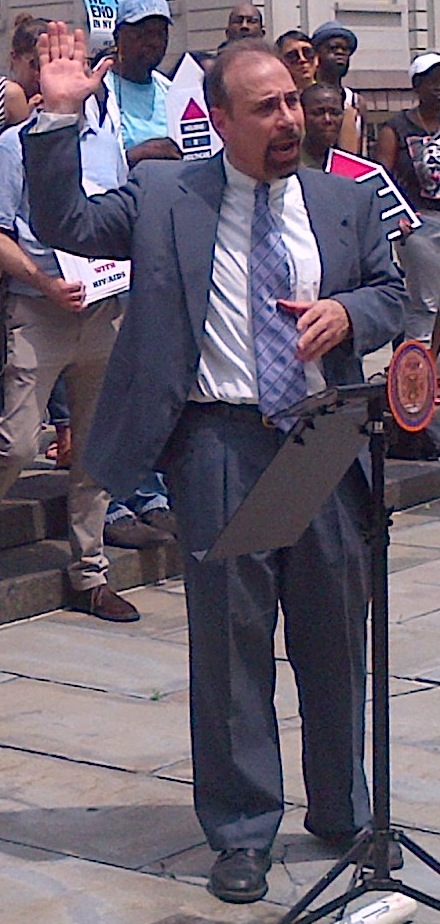
Armen H. Merjian is an Senior Staff Attorney with Housing Works, a NYC provider of HIV/AIDS services. His article–A Guinean Refugee’s Odyssey: In Re Jarno, The Biggest Asylum Case In U.S. History And What It Tells Us About Our Broken System 23 Geo. Immigr. L.J. 649 (2009)–was nominated for Throwback Thursday by immprof Andrea Saenz.
The article follows the story of Malik Jarno, a mentally-disabled juvenile asylum seeker from the African nation of Guinea. Malik’s family was persecuted by Guinean authorities for their opposition to the Conte regime. His father died in prison. His brother and uncle disappeared and are presumed dead at the government’s hands.
Orphaned at 13, Malik traveled to the Ivory Coast and then France with an aunt and cousins. But they abandoned him in France. A neighbor put Malik on a plane to the United States with a fake passport and advised him to claim asylum.
When he arrived in the United States, Malik spoke only Phlar and basic French. He was interrogated by an unqualified interpreter (a Spanish-speaking baggage handler) and ultimately housed in an adult jail to await his immigration proceedings. He would stay in adult gen pop for quite some time.
Malik lost his first asylum hearing. He managed to secure a second asylum hearing, which he also lost. On appeal, Malik won the right to a third trial. This time,
After more than six years, including almost three years behind bars, three trials and countless legal proceedings, motions, and appeals, and an unprecedented expenditure of time, effort and money, including international travel to Africa, Malik, an orphan of the world, had finally found freedom and a permanent home.
Merjian concludes that Malik’s treatment in the United States was “nothing short of appalling.” He remarks: “The imprisonment of asylum seekers alone, and imprisoning juvenile and/or mentally disabled asylum seekers in adult prisons in particular, is a disturbing human rights violation in urgent need of immediate reform.”
Merjian highlights the support that Malik ultimately managed to secure along the way, including “over seventy members of Congress, numerous national and international rights groups, and, critically, the pro bono assistance of nine legal organizations, including some of the country’s top law firms” that spent more than $4 million in fees and expenses towards his asylum claim.
Yet, despite benefiting from this extraordinary and unprecedented assistance, Malik suffered year upon year of profound injustice in his quest for asylum. At every turn in the narrative that follows, one must ask: if this was Malik’s experience, what is the experience of the thousands of adult and juvenile asylum seekers in America each year who are wholly unrepresented and unsupported in their asylum applications?
“One shudders to think,” Mejian concludes.
Andrea writes: “the genre of exposing flaws in the legal system through one person’s extremely compelling story is terrific and this is the one I always remember.” I can see why.
-KitJ