
Race is Politics: Castas Mexicanas and Mexican Views on the Migrant Caravan
Guest blogger: Pilar Calderon, law student, University of San Francisco
In our Livingroom hangs a rendering of La Sistema de Castas, a Mexican cast system used in New Spain in the seventeenth and eighteenth centuries. New Spain had a population composed of old and new world blood, traditions, customs, and language. Three primary races, the European whites (Peninsulares), Amerindians (Indios), and Africans (Negros) were the building blocks of modern Latin ethnicity.
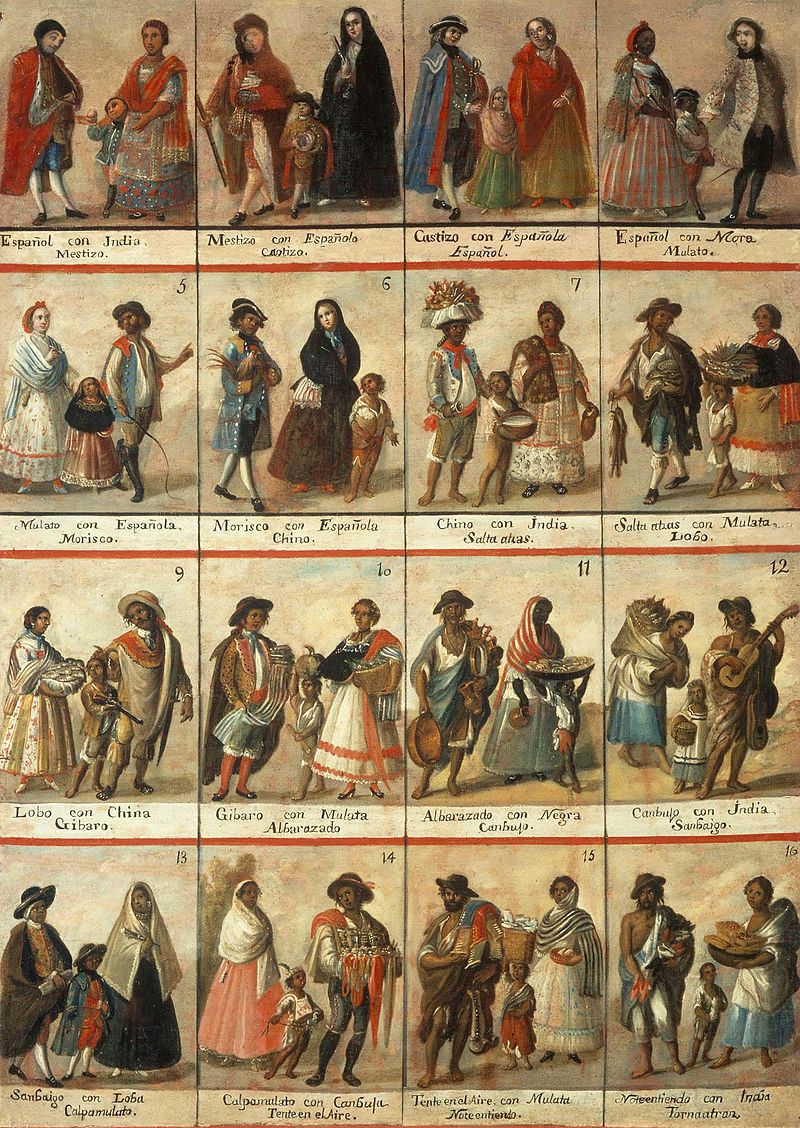
At its height, the cast system ranged from southern Alaska to the Panamanian isthmus. And overtime, a person’s physical features and sur name had lost its ability to understand the expanse of a person’s social standing. Pedro Huizar, a Mullato man born in the modest city of Aguascalientes, Mexico was a tradesman. His mastery in building and sculpture was recognized by a local Espaniol nobleman. While witnessing Huizar’s respect in the community Pedro Huizar’s cast place was elevated from Mestizo to Spanish Nobleman and the people were to address him as Don. Shortly following the growing practice of elevating community leaders out of their given class, violent rebellion exploded in all of Latin America.
For reasons too numerous to explore in one editorial, Latin American life, law, and attitude toward government, when juxtaposed against the United States can be surprising similar. Mexico, with its rich pre-colonial pride in its Aztec and Mayan ancestors, its wealth in natural resources, and its border with the United States (one of the longest and most active borders in the world) is a position coveted by most other Latin countries. Depending on the class of Mexican, invading masses of Central and South American’s poor are an unwelcomed sight.
This month, President Trump focused his rage on the mass of men, women, and children leaving the pitiful conditions of their homeland. For reasons as varied as physical safety, the closure of primary and secondary schools, victims of racketeering, and the devastation that befalls a community without public safety, education, or open markets. Migration through Mexico in the search of a better place is not new. Caravans of people traveling in groups to protect themselves from ruthless and unpredictable gangs, have been guided by charitable organizations such as Pueblo Sin Frontiers for years.
Before walking caravans, migrants from Latin America used the Mexican train system. These “cyclical migrant workers,” who were primarily of Mexican origin, migrated to and from the United States several times to work and send remittance money back to their home villages. The typical “cyclical workers” were young men of working age. The migrants, often illiterate and unaware of their rights were easy targets for criminals. While riding Mexico’s three-train network (that locals refer to as “the beast,” “train of unknowns,” and “the death train”) travelers risked injury from exposure, hunger, and lawlessness. Kidnapping poor migrants and demanding ransomed from their indigent families was a common.
Amnesty International, in a report on the Mexican attitude toward migration, noted that despite full awareness of the severity and frequency of harassment, assault, kidnapping, and rape of migrants, little efforts to enforce its laws were made. A great majority of Mexicans consider migrants to be a nuisance. Mexican laborers crossing into the United States has become an image synonymous with illegal immigration. It is perplexing then, that a country who earns half of its GDP by remittance, holds such contempt for its regional neighbors who attempt the same. Some commentators on the subject suggest that it is the migrant’s innocence and vulnerability which attracts harassment and abuse, which leads Mexicans to believe that if a migrant trail appears near their home, criminals and violence will inevitably follow.
Current Mexican President Peña Nieto has spent his term, working with both Obama and Trump, to use the Mexican federal military at its south border as the first line of defense for American immigration objectives. Serving as “gatekeeper”’ for the United States, conservative Peña Nieto is currently capturing and detaining individuals in the Migrant Caravan who have been identified as undesirable.
On December 1, 2018, President Peña Nieto will step down and President-Elect, Andres Manuel Lopez Obrador, will take office. Even before his presidential term has begun, Lopez Obrador faces a humanitarian crisis. Known well for his leftist views on the economy, immigration, and public service reforms, pundits suspect that Obrador will likely favor international standards for the treatment of migrants, and not cower to the demands and threats of the Trump administration.
Sample surveys of Mexican national attitudes toward invading migrants from Honduras show stark and clashing opinion, comparable to the polar political extremes in our own United States. Some Mexicans believe that national resources, military police, and aid should be spent on the millions of Mexicans already suffering from poverty. Others feel that the world is watching Mexico, and Mexico can and must dutifully support migrates and protect their vulnerable groups from the dark and dangerous trafficking centers.
Reading the news today, anticipating the domestic policy shifts that will likely come from the transfer of presidential power, all the while reflecting on the 17th century’s unapologetic illustration of racial hierarchies, I can’t help but notice that a Mexican person’s proximity to the United States is comparable to a “Cast members” genetic proximity to Spain.
bh