
Cambodian Refugees and the Criminal Removal Pipeline
Cambodian refugees who began migrating to the United States. during the Southeast Asian conflicts of the 1970s remain vulnerable to the “prison-to-deportation pipeline,” Agnes Constante reports for NBC News.
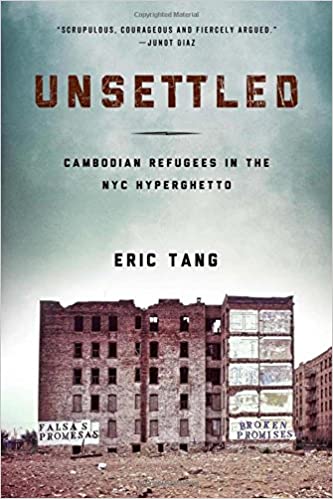
Professor Eric Tang, author of “Unsettled: Cambodian Refugees in the New York City Hyperghetto (2015), argues that the Refugee Act of 1980, which established a standardized refugee admissions system, fell short of addressing the needs of Southeast Asian refugees. If the United States recognized its rolein the conflicts in Cambodia and Vietnam, Tang says, “then maybe we wouldn’t have put all these conditions into the Refugee Act, which insisted on wildly unrealistic expectation that [refugees] would somehow find livable wage jobs overnight and become economically independent.”
Here is an abstract of Professor Tang’s book Unsettled:
“After surviving the Khmer Rouge genocide, followed by years of confinement to international refugee camps, as many as 10,000 Southeast Asian refugees arrived in the Bronx during the 1980s and ‘90s. Unsettled chronicles the unfinished odyssey of Bronx Cambodians, closely following one woman and her family for several years as they survive yet resist their literal insertion into concentrated Bronx poverty.
Eric Tang tells the harrowing and inspiring stories of these refugees to make sense of how and why the displaced migrants have been resettled in the “hyperghetto.” He argues that refuge is never found, that rescue discourses mask a more profound urban reality characterized by racialized geographic enclosure, economic displacement and unrelenting poverty, and the criminalization of daily life.
Unsettled views the hyperghetto as a site of extreme isolation, punishment, and confinement. The refugees remain captives in late-capitalist urban America. Tang ultimately asks: What does it mean for these Cambodians to resettle into this distinct time and space of slavery’s afterlife?”
KJ