
From the Bookshelves: Invisible People: Stories of Lives at the Margins by Alex Tizon
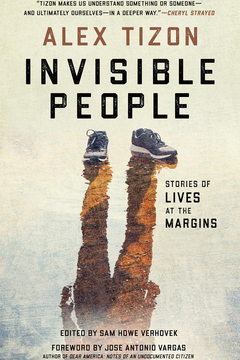
Invisible People: Stories of Lives at the Margins by Alex Tizon. Edited by Sam Howe Verhovek, Foreword by Jose Antonio Vargas
Every human being has an epic story, according to the late Pulitzer Prize–winning writer Alex Tizon, who spent his career telling the epic stories of marginalized people—from lonely immigrants struggling to forge a new American identity to a high school custodian who penned a New Yorker short story. Edited by Tizon’s friend and former colleague Sam Howe Verhovek, Invisible People collects the best of Tizon’s rich, empathetic accounts—including the Atlantic magazine cover story about the woman who raised him and his siblings under conditions that amounted to indentured servitude, “My Family’s Slave.”
Mining his Filipino American background, Tizon tells the tales of immigrants from Cambodia and Laos. He offers a fascinating account of the Beltway sniper and insightful profiles of Surfers for Jesus and a man who tracks UFOs. His articles—many originally published in the Seattle Times and the Los Angeles Times—brim with enlightening details about people who existed outside the mainstream’s field of vision.
Introducing Tizon’s pieces, New York Times executive editor Dean Baquet, Atlantic magazine editor in chief Jeffrey Goldberg, Pulitzer Prize winners Kim Murphy and Jacqui Banaszynski, and others salute not only the beauty and brilliance of Tizon’s writing but also the respect he shows his subjects. Invisible People is a loving tribute to a journalist whose search for his own identity prompted him to chronicle the lives of others.
Alex Tizon (1959–2017) was a Pulitzer Prize–winning journalist whose writings include numerous articles for such publications as the Seattle Times, the Los Angeles Times, and The Atlantic, as well as the memoir Big Little Man: In Search of My Asian Self.
His final story, titled My Family’s Slave, was published as the cover story of the June 2017 issue of The Atlantic after his death, sparking significant debate. The article tells the life story of a Filipino woman, known in the family as “Lola” (grandmother in Tagalog), who lived with Tizon’s family for 56 years, for most of that time essentially as a slave.