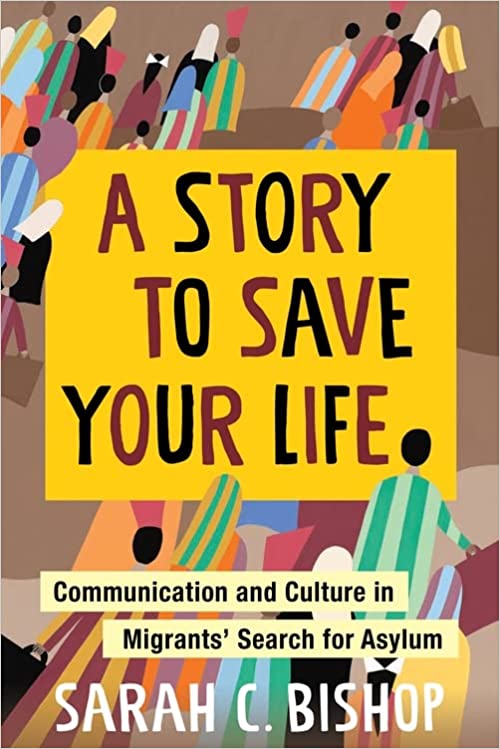
New Book “A Story to Save Your Life” Looks at the Role of Narrative in Asylum Cases
As an immigration researcher (and not an attorney), I was struck as many academics are by the role of narrative in immigration cases. Not only are asylum seekers in particular expected to recount in detail particular aspects of their cases in a very specific (typically chronological) order that maps on to narrow, bureaucratic ways of knowing, but they are also expected to maintain a level of narrative consistency that is unusual even among those understood to be acting in good faith.
Sarah Bishop, professor at Baruch College in NYC, has a new book out that examines these issues. The book argues that: “Cultural differences in communication shape every stage of the asylum process, playing a major but unexamined role. Migrants fleeing persecution must reconstruct the details of their lives so governmental authorities can determine whether their experiences justify protection. However, Bishop shows, many factors influence whether an applicant is perceived as credible, from the effects of trauma on the ability to recount an experience chronologically to culturally rooted nonverbal behaviors and displays of emotion. For asylum seekers, harnessing the power of autobiographical storytelling can mean the difference between life and death.”
This book will likely be of interest to researchers, attorneys, and students alike.
Learn more about the book here: https://cup.columbia.edu/book/a-story-to-save-your-life/9780231204095.