
Evil May Day
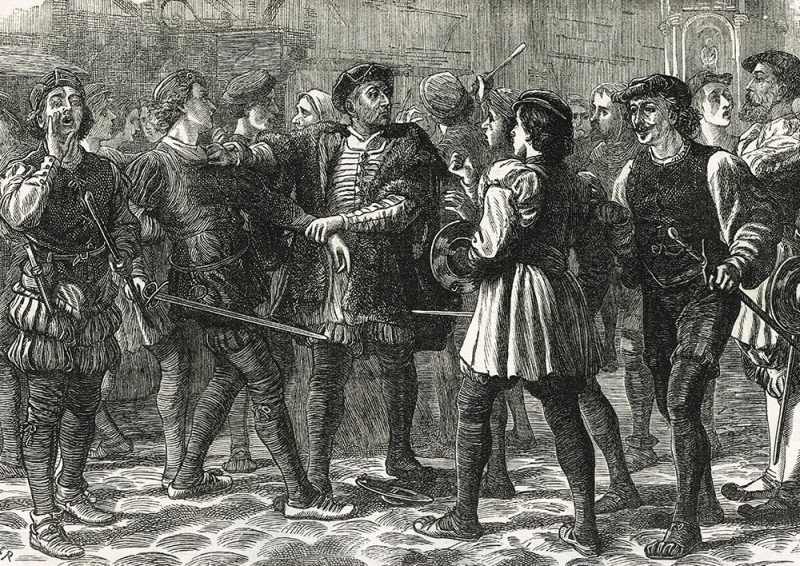
I recently learned about a pretty wild piece of immigration history: Evil May Day.
The year: 1517. (Yes, 1517. The 16th Century. This is an ollllld bit of history.)
The place: London, England.
As the Smithsonian Magazine recounts, May Day had been a traditional time of celebration. But in 1517:
Over 1,000 angry citizens rampaged the city; within days, hundreds were arrested and more than a dozen were executed, their bodies displayed on gibbets. A cherished festival day had become violent—and all because London workers claimed foreigners were stealing their jobs.
Foreigners stealing jobs. Tale as old as time, amiright?
What led up to these days of rioting? For one, the city was experiencing an economic downturn coupled with increased skepticism about the government–particularly concerns over whether the government was giving foreigners advantages that allowed them to take jobs and money away from true Londoners. Plus, before the rioting, there was an “open-air address” by a priest who told his listeners that noncitizens “eat the bread from poor fatherless children” and encouraged folks to “cherish and defend themselves, and to hurt and grieve aliens.” That riled some folks up.
At the time, London had a population of about 50,000. (Today it’s closer to 9 million.) Only about 2% of those 50,000 were born abroad.
The noncitizens attacked by the mob ranged from “Flemish cobblers” to “French royal courtiers.”
The riot was ultimately suppressed. Many rioters were arrested and a fair number were sentenced to death for “‘treasonously’ attacking foreigners who were considered to be under the protection of the king.”
-KitJ