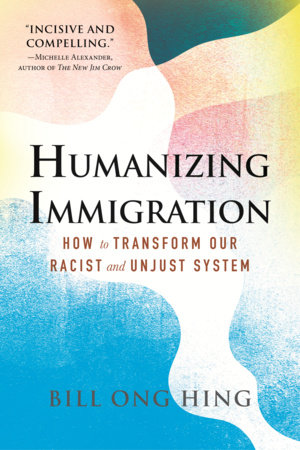
“Representing non-citizens caught up in what he calls the immigration and enforcement `meat grinder’, Bill Ong Hing witnessed their trauma, arriving at this conclusion: migrants should have the right to free movement across borders—and the right to live free of harassment over immigration status.
He cites examples of racial injustices endemic in immigration law and enforcement, from historic courtroom cases to the recent treatment of Haitian migrants. Hing includes histories of Mexican immigration, African migration and the Asian exclusion era, all of which reveal ICE abuse and a history of often forgotten racist immigration laws.
While ultimately arguing for the abolishment of ICE, Hing advocates for change now. With fifty years of law practice and litigation, Hing has represented non-citizens — from gang members to asylum seekers fleeing violence, and from individuals in ICE detention to families at the US southern border seeking refuge.
Hing maps out major reforms to the immigration system, making an urgent call for the adoption of a radical, racial justice lens. Readers will understand the root causes of migration and our country’s culpability in contributing to those causes.”
Kirkus Reviews positively reviews the book:
“A professor of immigration law with five decades of experience offers some fixes for a broken system.
Arguing from the outset that U.S. immigration laws are fundamentally racist and unjust, Hing, the author of Deporting Our Souls and American Presidents, Deportations, and Human Rights Violations: From Carter to Trump, presents ample evidence of their sometimes Kafkaesque, frequently wantonly cruel applications. . . . Throughout, Hing writes with emotion but moves back and forth smoothly between human stories and legal ones, ensuring that lay readers have the context necessary to understand how the latter affect the former. Within each discussion of specific immigration topics, the author suggests concrete reforms, such as applying reasonable proportionality to the cases of noncitizens accused of crimes. He doesn’t stop there, however; his eyes are on a bigger prize: `I count myself among those who call for the abolition of the immigration system altogether. Migrants should have the right to free movement across borders and the right to live free of harassment over immigration status. Our system must be transformed into one that prioritizes our humanity first.’ By the time they finish the concluding capsule history of U.S. immigration policy’s structural racism, many readers will agree with him.
A powerful, cogent indictment.” (bold added).
KJ