Father Dionysius Mintoff: A Beacon of Hope for Migrants and Asylum Seekers in Malta
Guest blogger: Eric Asare, Masters in Migration Studies Program student, University of San Francisco:
In the summer of 2018, after visiting some countries in Europe (Netherlands, Germany, Iceland, France, Italy), a friend suggested to me, he said “Eric, there is small island south of Sicily, it is just as beautiful as Sicily, you can visit since you still have a week of holiday remaining.” I checked it out online and I fell in love with it right away. From its ancient architecture to it beautiful turquoise blue waters, its history, I bought a ticket the next day to see this small island in the middle of the Mediterranean Sea between Italy, Tunisia, and Libya. I landed in Malta the next day and just like what any tourist would do, I looked for the most exciting places to see in the country. I was blown away by its crystal-clear blue seas and stunning medieval churches and its history (from Phoenician, Carthaginian, Roman, Ottoman and French rule to British rule and the crucial role it played during the first and second world wars)
As I was visiting the sites I had penned down, I noticed something similar to what I witnessed in Italy, hundreds of migrants at some spots waiting to be picked up for jobs. Most of these migrants worked in the construction industry, agriculture, care industry, hotels and restaurants. Because of Malta’s location in the Central Mediterranean, it receives thousands of migrants fleeing civil unrest, poverty, and climate induced crisis from the Middle East, North Africa and Sub-Saharan Africa. It was not entirely different from what I witnessed in Italy, but this felt a bit different because of the small size of the country (land 320 km² and population of just over 520,000). I saw hundreds of asylums seekers from the MENA region (Middle East and North Africa) and from Sub-Saharan Africa in detention camps and then released to open centres where they can continue their asylum application process. Because of my interest in the issue of migration, I decided to find out more about the situation of asylum seekers in Malta who are usually rescued at sea by the Armed Forces of Malta and other NGOs rescue ships. I noticed that except for women and obvious minors, all asylum-seekers disembarked in Malta were automatically and systematically detained upon arrival for several months after they have been pre-screened by the Police and Health Authorities at an Initial Reception Centre (IRC) in Marsa not far from where my hotel was.
Witnessing the large numbers of migrants stationed at this particular round about looking for jobs in the morning, I approached them and struck conversations with them. Most of them were migrants from the MENA region and Sub-Saharan Africa. I spoke with some migrants from Nigeria, Ivory Coast, Sudan, Eritrea, Syria, Iraq, Afghanistan, Libya, Ghana etc. They told me if I wanted to witness more about the asylum seekers and their conditions, I should visit the detention centres and also the open centres. They mentioned specifically to visit Hal-Far open centre and to visit an NGO near the open centre that helps rejected asylum seekers. I visited one of the detention centres in SAFI, but I was not allowed in because it was a security zone. I continued to the Open centre (Hal-Far Open Centre) the migrants suggested and I saw hundreds of asylum seekers crammed into containers stuck on top of another container. Here migrants are free to go in and out but are supposed to register their presence at least three times a week or lose their monthly stipends and possibly their place at the centre. The open centre can host 2,400 asylum seekers when full. The conditions in the centre are deplorable, aside the poor hygienic conditions and over-crowding, the inadequately insulated containers become extremely hot in the summer (temperature can rise to as high as 38 degrees Celsius) and extremely cold in the winter. Aside the deplorable conditions asylum seekers face in the open centre, it is also located in very remote area of the country, leaving asylum seekers isolated from the society.
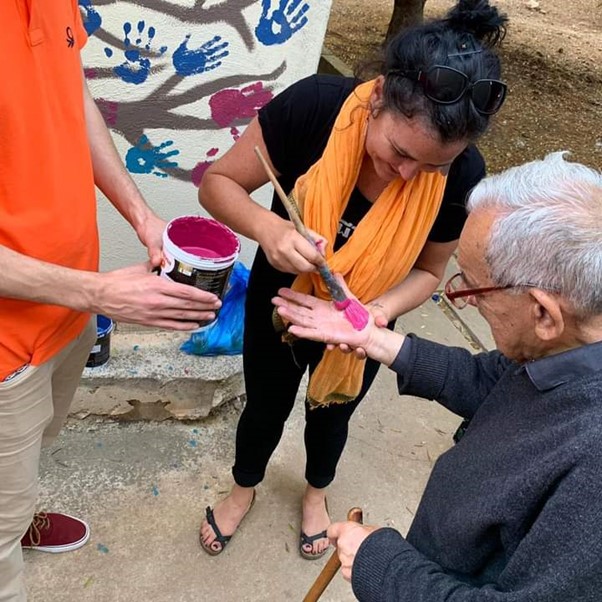
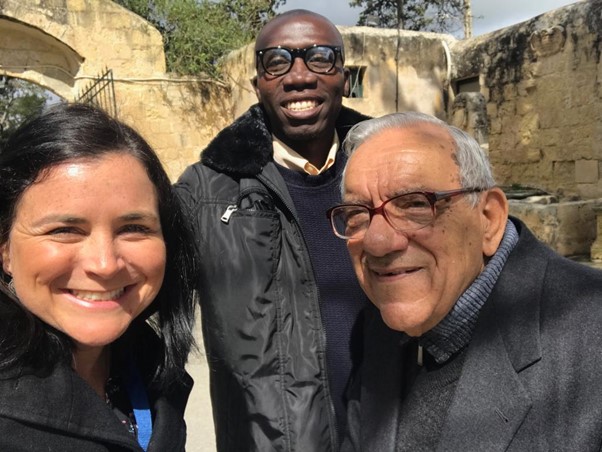
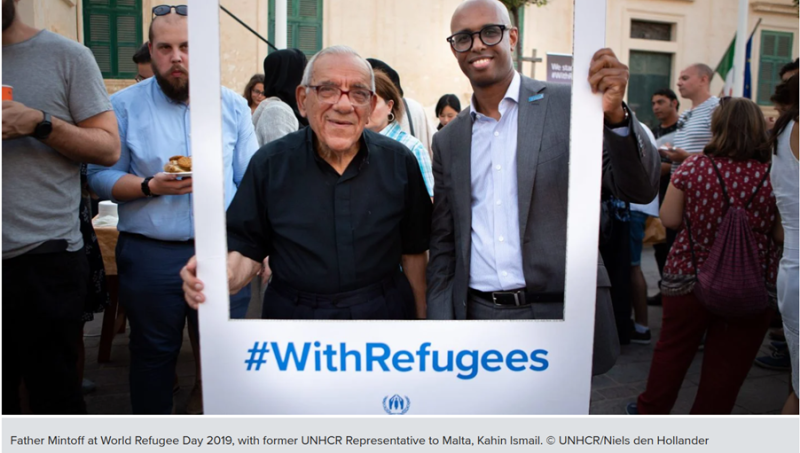
I visited the NGO, the asylum seekers asked that I visit close the open centre that houses the asylum seekers. That is where I met this incredible Franciscan Frier (Father Dionysius Mintoff), who drastically changed my views on social justice, immigrant rights, human right, and hospitality. The now 93-year-old Franciscan frier, has dedicated his life for the promotion of peace globally and the last twenty-two years to advocating for the welfare of migrants and asylum seekers in Malta and around the world. Fr. Dionysius’s leadership is rooted in his faith (religious values), and personal experiences, particularly his firsthand experience of the second World War. Inspired by his experience and an appeal made by Pope John XXIII, he established the Peace Laboratory in Malta in 1971, to open a space that advocates for peace education in Malta. The location of the centre is very symbolic as it is situated at Hal Far, once a site of intense air combat during the second world war because it was part of the British airfield. In an interview with the UNHCR, Father Mintoff said “Ħal Far was a hub and centre of war. It saw thousands of soldiers and sailors coming from the entire Commonwealth,” He continued we “Transformed this space from a place of war to a place peace.” This centre serves as a beacon for peace education, emphasizing the importance of fostering understanding and cooperation among people of diverse backgrounds, religion, nationality, race, and political ideologies.
Decades later in 2002, Father Mintoff transformed the centre into a shelter for asylum seekers who began to come to the island in large numbers through the central mediterranean from Libya. In that same interview, he recalls what led to the transformation of the centre in a place of shelter for asylum seekers. Father Mintoff remembers the night, he heard loud screams coming from the army barracks situated just across the road from the Peace Lab. The next morning, He inquired of the cause of the commotion and was informed by the guards that several individuals, from a number of African countries, had arrived in Malta on a boat in search of asylum. He said “There was a lot of panic that spread around Malta after this. The Maltese thought that these individuals would spread disease, take their jobs and most of all take over our [Roman Catholic] religion”. Since then, the Peace Lab has offered shelter to refugees and migrants. With the residents at the centre coming from different countries and different religious view, Father Mintoff put up a mosque and an additional prayer room in addition to the Church at the centre, so that the asylum seekers majority of whom are Muslims can have a place of prayer for themselves and feel at home at the centre.
I call Fr. Dionysius a transformative leader because of his unwavering dedication, compassion, inclusivity, empathy and commitment to serving the marginalised and vulnerable in society. His ability to adapt and evolve with changing societal needs, as seen in the transformation of the Peace Lab into a sanctuary for migrants, showcases his visionary leadership. The centre now provides essential support such as shelter, food, clothing, English language lessons, job placement assistance, and integration programs for migrants and asylum seekers from Africa and the Middle East. Another important program he used to run was a Radio Program (Connect Africa) to educate the Maltese about Africa’s history, and culture as most Maltese had no idea about the continent except the negatively skewed narrative about the continent being riddled with disease, poverty, and wars. He believes for Maltese and the asylum to be able to integrate, they need to learn about each other to be able to understand and accommodate each other. Father Dionysius is an incredible as person and I strive to emulate his dedication to serving the marginalized and his commitment to fostering a sense of belonging and acceptance for all. Fr. Dionysius inspires me to lead with integrity, humility, and a steadfast belief in the inherent dignity and worth of every individual regardless of religion, race, nationality, political persuasion etc. His tireless effort in serving the poor and marginalised in society is what convinced me to volunteer for the centre for five years. A short normal holiday in Malta turned into a stay of five years helping my brothers who are less fortunate. In those five year I have learnt invaluable lessons. His legacy reminds me of these verses in the scriptures in Hebrews 13:2 which says, “Do not forget to show hospitality to strangers, for by so doing some people have shown hospitality to angels without knowing it.” And Matthew 25:42-24 which says, “For I was hungry and you gave me nothing to eat, I was thirsty and you gave me nothing to drink, I was a stranger and you did not invite me in, I needed clothes and you did not clothe me, I was sick and in prison and you did not look after me.’
“They also will answer, ‘Lord, when did we see you hungry or thirsty or a stranger or needing clothes or sick or in prison, and did not help you?’
“He will reply, ‘Truly I tell you, whatever you did not do for one of the least of these, you did not do for me.’”
In April 2022, Pope Francis made a historic visit to Malta, where he visited the Peace Lab and met with asylum seekers. This visit was a significant moment for the migrants, as they were thrust into the global spotlight, with their stories and challenges taking center stage in the media. The Pope’s visit had a profound impact, helping to reduce the socio-political tension surrounding migrants in Malta. By listening to their stories firsthand, Pope Francis brought attention to the humanity and dignity of asylum seekers, challenging negative narratives and fostering a sense of compassion and understanding. His tireless work and dedication to migrants has not gone unnoticed as he has won several awards, but he told me what really gets him excited is when he sees the residents happy and living together peacefully despite their different nationalities, race, and religion. Father Mintoff’s commitment to social justice and inclusivity serves as a shining example. In a world where xenophobia and intolerance are all too common, Father Mintoff’s unwavering voice stands out as a beacon of hope. Consistently speaking out against discrimination of any form, reminds us that all people, regardless of their background or circumstances, deserve to be treated with dignity and respect. As leaders grapple with complex issues surrounding migration and integration, Father Mintoff’s example serves as a guiding light.