
The Long and Winding Road Followed by an Undocumented Immigrant: To Law School and Legal Status
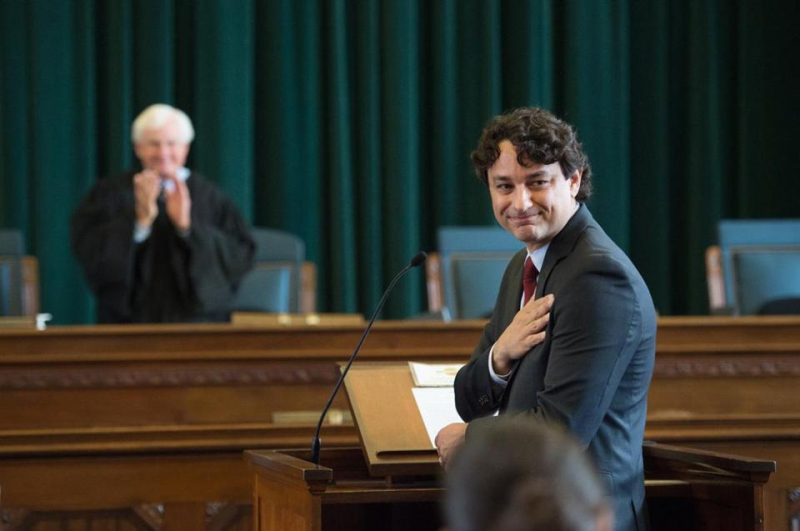
Photo courtesy of the Boston Globe
Remember Sergio Garcia, the undocumented immigrant who persevered and obtained his law license in California. The Boston Globe tells another “feel good” immigration story. Antonio Massa Viana was a star law student at Roger Williams University School of Law. He was also undocumented. Viana in 2014 became the first known unauthorized immigrant to be admitted to the bar in Massachusetts.
Viana is now here legally — he said he received a green card last year through his wife, a naturalized US citizen from Argentina. His long and complicated immigration history began when his mother came to America as a teenager in 1962 to marry a US citizen. They had two American children and she received a green card, but it lapsed after she and her husband split up. She returned to Brazil and had two more children, including Viana. The family returned to America when Viana was 12. His mother tried to get Viana a green card but filled out the wrong form and he had to go back to Brazil. When he was 19 he came back as his family settled in New York and tried again, but he had missed the age cutoff by one year.
Over the next two decades, Viana tried to get a green card through family and work. Most of his relatives are US citizens, including his mother. He disclosed his legal status to Rhode Island officials and was allowed to take the exam, though he was not allowed to get a law license until he was a legal permanent resident or a citizen, as the state requires. Viana said he called Massachusetts officials and discovered that the state had no such requirement for people taking the bar exam. He passed both bar exams on the first try. Massachusetts issued his law license in 2014 and ironically. Court officials had no comment.
Until 1973, Massachusetts required lawyers to be US citizens, but that year the US Supreme Court struck down a similar law in Connecticut because it discriminated against non-citizens. After the Supreme Court ruling, Massachusetts courts started to admit noncitizens to the bar, but the state never clarified whether undocumented immigrants could apply.
KJ