
Law & Society Flashback: The Politics of Respectability and Immigrants
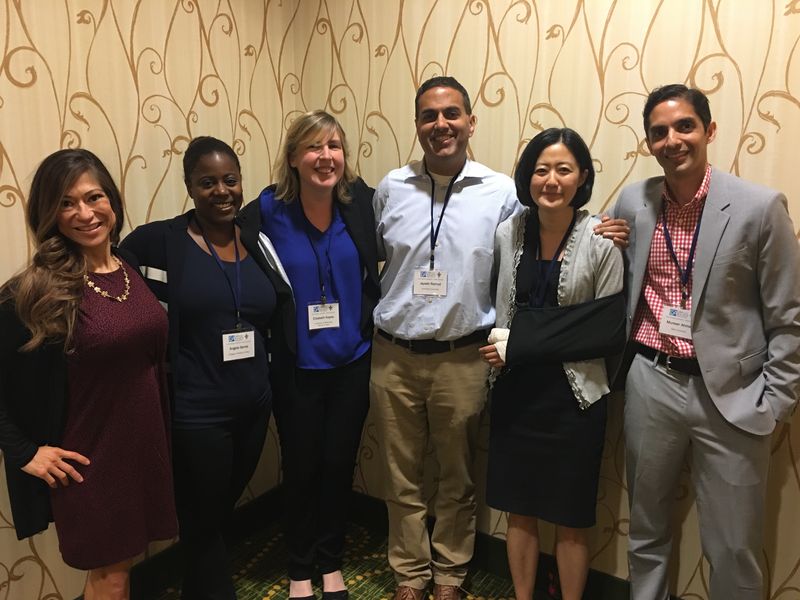
Last Thursday, I had the pleasure of sitting in on a Law & Society panel regarding The Politics of Respectability and Immigrants.
Angela Banks (William & Mary) introduced the panel by explaining “respectability” – it’s a political strategy used by “any social group subject to marginalization” whereby they argue for equal rights based on the having the same values, norms, and practices as mainstream society. While academic discussion of respectability politics has, to date, largely focused on African Americans, this panel explored the concept in regards to immigrant communities.
Mariela Olivares (Howard) spoke about the “power of narrative” in immigration politics (e.g. “surge” and “flood” versus “refugees”). And, in particular, she identified the “narrative dilemma” that occurs when pushing the respectability of one group necessarily involves the denigration of group outsiders (“families not felons”).
Liz Keyes (Baltimore) spoke about the “crispness” of the DREAMer narratives that has driven their political gains. But she sees problems at the reform level given that 85% of the undocumented population do not fit within the DREAMer narrative and, in the end, deferred action with its lack of durability is a “crappy outcome.” She also sees the DREAMer success as shrinking discretion on an individual basis. (See this post about her client Juan who has been affected by shrinking discretion).
Jennifer Lee (Temple) spoke about narratives regarding immigrant workers and, in particular, how workers might “own, shape, and deploy” narratives. She spoke about how the narrative of the “good and hard [migrant] worker” touches on the universal message of those who want to improve their family’s lot, and she identified the other important narrative of victimization of migrant employees by US employers who do not obey the law. She also noted the downsides to narrative, “out groups” of those who do not and cannot belong and “essentializing” or defining individuals by virtue of the low wage jobs they hold. These are perils to “master framing” that may be remediable if workers themselves choose their own framing.
Muneer Ahmad (Yale) spoke about the framing of “earned citizenship” as a moral and political issue. He described the origins of the concept (IRCA) and it’s intended goal (to counter the bad amnesty narrative). Earned citizenship was a good counterbalance to fears of amnesty by suggesting that individuals obtained citizenship based on merit – a message that evolved in 2013 to a multi-stage test of cultural competency, taxes, and economic contributions. But, there is a significant downside of placing migrants constantly in a deficit where status earned is consistently precarious until citizenship is obtained.
Jayesh Rathod (American) spoke about how respectability is already incorporated into immigration law through the concept of good moral character, a concept that’s been around since 1790. He looks at good moral character through the lens of history (where good moral character reflects both norms and nativism), by way of a systemic analysis (seeing good moral character applied inconsistently across immigration categories) and teleologically (looking for the purpose driven framework that underlies the immigration law).
A fascinating panel. Look for these great papers to come!
-KitJ