
Immigration Article of the Day: Peter Margulies, Studying Noncitizens: Immigration, the University, and the First Amendment
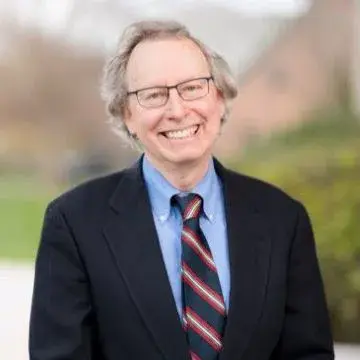
Peter Margulies, Studying Noncitizens: Immigration, the University, and the First Amendment
Abstract
From its campaign against anti-war protesters in World War I to the present, the government has tried to restrict the pure political speech of noncitizens, defined as noncitizens’ expression of views about the structure and policies of the U.S. government and governments of foreign nations. Threats to academic freedom are also a hallmark of government action in this domain. Taking a page from this book, the Trump administration has targeted noncitizen students who participated in campus protests against Israel’s military actions in Gaza after Hamas’s brutal attacks on October 7, 2023.
The Trump administration’s effort has viewpoint discrimination at its core. In an executive order, resident Trump cited the importance of combating noncitizens’ “hostile attitudes” toward American government, institutions, and “founding principles.” In implementing President Trump’s directive, Secretary of State Marco Rubio invoked a rarely used provision of the Immigration and Nationality Act (INA) that allows the Secretary to seek the removal of a noncitizen who could “compromise a compelling United States foreign policy interest.” Congress and officials from the Reagan administration, including John Bolton, who aided in drafting, contemplated that the government would use its authority sparingly, to address concrete threats. The spare past practice on this provision echoes that insight, dealing with financial crime and violence abroad.
In contrast, Secretary Rubio has cited a range of rationales related to political speech, including ending demonstrations that he has called “antisemitic protests” and “disruptive activities.” Illustrating the viewpoint discrimination hard-wired into these measures, Secretary Rubio claimed that an op-ed on divestment in the Tufts University daily newspaper by student Rümeysa Öztürk made “common cause” with a designated foreign terrorist group.
Historically, the Supreme Court has addressed many such cases through the lens of U.S. citizens’ derivative First Amendment interests in hearing noncitizens speak on matters of public concern. In such cases, the Court has asked whether the official rationale for curbing noncitizens’ speech and citizens’ access is facially legitimate and bona fide. Due to the lack of definitions for hotly contested concepts such as antisemitism in Secretary Rubio’s memoranda, his rationale fails this test.
This Article also addresses how the First Amendment and rules of statutory interpretation directly protect immigrants and nonimmigrants such as holders of student visas. Legal problems with the Trump administration’s approach to the foreign policy provision are especially acute for a lawful permanent resident (LPR) such as Columbia’s Mahmoud Khalil. Invocation of the broadly worded foreign policy provision conflicts with an LPR’s stake in the United States. Therefore, a clear statement rule of statutory interpretation would find that the foreign policy provision was inapplicable to LPRs. Holders of student visas, while they lack the stake of LPRs, have a sufficient stake in stability to merit a direct First Amendment right to voice political speech. However, because the student’s role includes burdens as well as benefits, noncitizen students must respect others in the academic community. To shoulder that burden, noncitizen students cannot disrupt particular classes, contribute to a hostile environment by targeting other students, or support particular terrorist activities. Thus cabined, noncitizen students’ rights serve the spirit of robust inquiry that fuels academic freedom and our democracy itself.
KJ
Posted in: