
A Bird’s Eye View of the Nevada Democratic Presidential Debate

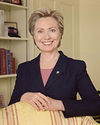
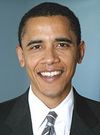 This blogger attended this past Tuesday night’s Nevada Democratic Presidential Debate at the Cashman Center in Las Vegas. The debate preceded this Saturday’s Nevada caucuses. Both before and after the debate, pundits have called the outcome of the race among the three remaining Democratic candidates as too close to call.
Not coincidentally, the debate was held on Martin Luther King, Jr.’s birthday (Jan. 15). A collection of African American and Latina/o organizations, including 100 Black Men of America, the African American Democratic Leadership Council, the U.S. Hispanic Chamber of Commerce (which provided my ticket), and IMPACTO, as well as the Nevada Democratic Party and the College of Southern Nevada, sponsored the debate.
Like the sponsors, the racially diverse audience reflected the “base” of the Democratic Party. Democratic politicos, union members, liberal corporate contributors, and Nevada Democratic Party leaders (including the Nevada Caucus chair sitting next to me), filled the convention center. Among the high profile Latina/os in attendance were Dolores Huerta of the United Farm Workers and John Trasviña, President and General Counsel of the Mexican American Legal Defense and Educational Fund.
After a tense week–-especially between Senators Barack Obama and Hillary Clinton focusing on issues of race, some observers predicted that we would see fireworks during the debate. They were unquestionably wrong. As my colleague Keith Aoki observed, we expected the “Thrilla in Manila” (the third Muhammad Ali/Joe Frazier super fight) but saw a lovefest or, to continue the fight analogy, a pillow fight.
The preliminaries, including greetings from the mayor of Las Vegas and words from the sponsors, ended abruptly as Hillary Clinton, John Edwards, and Barack Obama, all entered the convention center to enthusiastic applause. NBC televised the debate with Brian Williams, Tim Russert, and Natalie Morales asking questions, which, as discussed below, were most disappointing.
One of the pleasing aspects of the debate to me was that the three candidates remaining represent key – and much valued – constituencies of the Democratic Party. The first serious woman and African American Presidential candidates have gained much attention. But John Edwards’ populist message of fighting for the middle class and the poor resonates with the blue collar and pro-union heart of the Democratic Party–-especially when he talks of growing up the son of a mill worker who was the first in his family to attend college (a public university no less).
Because of the sponsors, the debate had been labeled the Black/Brown debate. However, in no small part due to the questions posed by the moderators, little attention was paid to issues of special concern to African Americans and Latina/os.
For example, surprisingly enough, immigration received tremendously little attention. This makes little sense given the importance of immigration to Nevada’s large and growing Latina/o population (unlike the states –- Iowa and New Hampshire –- that had seen the most recent campaigns and debates) and the changing racial demographics of the state’s labor unions. In his introduction, the head of the U.S. Hispanic Chamber of Commerce, David Lizarraga, garnered applause from the audience when he emphasized the need to fix our “broken” immigration system. But only an hour-and-a-half into the debate was immigration raised–-albeit in a clumsy fashion.
John Edwards was asked what the problem was with English being declared the official language of the United States, a one-sided way of dividing and splintering the voters along racial lines. Edwards responded that the nation needs comprehensive immigration reform, with a path to citizenship (but not the dreaded “amnesty”) for undocumented immigrants, who would need to pay a fine and learn English (which, he failed to mention, is a current requirement for naturalization). Edwards obliquely suggested that government should help integrate immigrants into society, but did not say how.
Given only 30 seconds to respond, Senator Obama noted that he had demonstrated commitment to addressing the immigration issue by sponsoring comprehensive immigration reform.
And that was it for the night on immigration.
In short, the discussion of immigration in the debate was disappointing to say the least.
More generally, many people in the audience found unsettling the fact that Black/Brown issues such as racial disparities in education, criminal justice, employment etc. -– failed to get more play in the debate. Much attention was paid to issues such as energy (including nuclear power and the Yucca Mountain controversy, important to many Nevadans), the war in Iraq, mortgage crisis, and the economy. These unquestionably are important issues but one would have hoped that specifically Black/Brown issues might have at least been covered in a debate sponsored by African Americans and Latina/os, communities eager to become relevant to – and talked to and not just talked about – this campaign for the Presidency.
Although denying that race was an issue in the campaign, Barack Obama did respond to a question about Black high school dropout rates. He mentioned problems with the educational system but also suggested that African American parents (and absent fathers) bore some of the blame. I will not comment on this last statement but bet that many African Americans have strong views about it. In addition, Hillary Clinton raised issues of race in her responses to a question about the economy by emphasizing the disparate impact of the nation’s economic difficulties on African Americans and Latina/os.
But, generally speaking, the candidates displayed a careful -– and surely calculated –- effort to avoid personal attacks and the potential divisive issues of race. All emphasized the unity within the Democratic Party on issues of civil rights and racial progress. We are one big happy Democratic family!
Who won the debate? It is hard to say, but there did not seem to be anything new that came out in the two hour discussion. The Nevada caucus chair sitting next to me thought that the minds of very few Nevadans would be swayed by the debate.
It does seem clear that controversial issues such as race, civil rights, and immigration are difficult for Presidential candidates to discuss in a meaningful way, prone to create controversy and criticism, and easier to avoid than to discuss and address.
To be fair to the candidates, however, the questions failed to focus on issues of special concern to African American and Latina/o. Indeed, one heckler even briefly disrupted the debate by yelling about the poor questions.
The first questions in the debate focused on the recent brouhaha over race, Martin Luther King Jr. and Lyndon B. Johnson, etc. The last question from an e-mail bordered on the absurd: “When did you decide to run for President?” This sounds more like a feel-good question that, absent some kind of idiot’s mistake, a candidate could not fail to answer (politically) correctly. One could have hoped for some real questions that brought out the issues, especially important to African Americans and Latina/os that the Nevada debate sponsors unquestionably hoped for in sponsoring the debate.
Well on to the Nevada caucuses and SuperTuesday!
KJ