
Immigration Mileposts: May 6, 1882 — Congress Passes the Chinese Exclusion Act
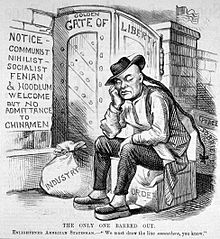
A little over 130 years ago, the U.S. Congress passed its first major piece of legislation regulating immigration to the United States. It is known today as the Chinese Exclusion Act, a moniker that aptly encapsulates the law’s anti-Chinese flavor. The ABA Journal describes the historical context of the law’s passage:
“As the Civil War wound down, the U.S. economy struggled. Jobs declined. At the same time, immigration—legal and illegal—skyrocketed. The new immigrants readily accepted jobs at low pay, leaving many longtime citizens unemployed and increasingly frustrated and angry.
Disgruntled white Americans demanded that political leaders round up immigrants and send them back to their native lands. At the very least, they argued, the federal government needed to secure the borders and stop the influx of immigration. By 1880, more than 9 percent of California’s population was Asian.
Attempting to appease an angry electorate, Congress passed—and President Chester Arthur signed—the Chinese Exclusion Act, which effectively closed America’s borders to those with Chinese heritage, including people who were actually citizens of countries other than China.” (emphasis added).
The U.S. Supreme Court rejected a variety of legal challenges to the Chinese Exclusion Act in what is known as The Chinese Exclusion Case. In so doing, the Court created the “plenary power doctrine” immunizing the immigration laws from judicial review. The plenary power doctrine, despite a constitutional revolution over the last century, remains good law and continues to limit judicial review of the U.S. immigration laws.
In 2012, Congress formally apologized for the Chinese Exclusion Act.
KJ