
Past Executive Orders and the Impacts on Civil Rights
As the nation awaits President Obama’s speech on immigration and the rumored announcement of an executive order (I am inclined to think that it will not be an executive order but some kind of policy directive like that announcing the Deferred Action for Childhood Arrivals program), it might be helpful to consider the historical context and ripple effects of previous executive orders that touch on civil rights concerns — orders that were quite controversial at the time of their issuance.
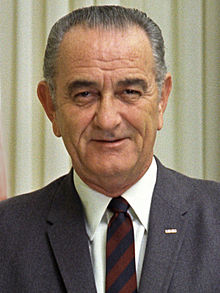
Executive Order 11246, signed by President Lyndon B. Johnson on September 24, 1965, established requirements for non-discriminatory practices in hiring and employment on the part of U.S. government contractors. It “prohibits federal contractors and federally assisted construction contractors and subcontractors . . . from discriminating in employment decisions on the basis of race, color, religion, sex, or national origin.” It also requires contractors to “take affirmative action to ensure that applicants are employed, and that employees are treated during employment, without regard to their race, color, religion, sex or national origin.”
The order was a follow-up to Executive Order 10479 signed by President Dwight D. Eisenhower on August 13, 1953 establishing the anti-discrimination Committee on Government Contracts, which itself was based on a similar Executive Order 8802 issued by President Franklin D. Roosevelt in 1941.
The Executive Order differed significantly from the requirements of the Civil Rights Act of 1964, which only required organizations to document their practices once there was a preliminary finding of wrongdoing. The Order required the businesses it covered to maintain and furnish documentation of hiring and employment practices upon request. The Executive Order also required contractors with 51 or more employees and contracts of $50,000 or more to implement affirmative action plans to increase the participation of minorities and women in the workplace if a workforce analysis demonstrates their under-representation, meaning that there are fewer minorities and women than would be expected given the numbers of minorities and women qualified to hold the positions available.
Federal regulations require affirmative action plans to include an equal opportunity policy statement, an analysis of the current work force, identification of under-represented areas, the establishment of reasonable, flexible goals and timetables for increasing employment opportunities, specific action-oriented programs to address problem areas, support for community action programs, and the establishment of an internal audit and reporting system.
In 1969, the Nixon administration made affirmative action part of its civil rights strategy. In 1971, a three-judge panel of the U.S. Court of Appeals for the Third Circuit affirmed the validity of Executive Order 11246.
Executive Order 11246 set the groundwork in place for affirmative action, which remains controversial. In 1969, a American Bar Association Journal article referred to the order as “Executive Encroachment.” Still, the order had far-reaching impacts on emploers and other important social institutions for generations, including through to this day.
KJ