
Jose Padilla Lives! Crimmigration Events at DU Law School
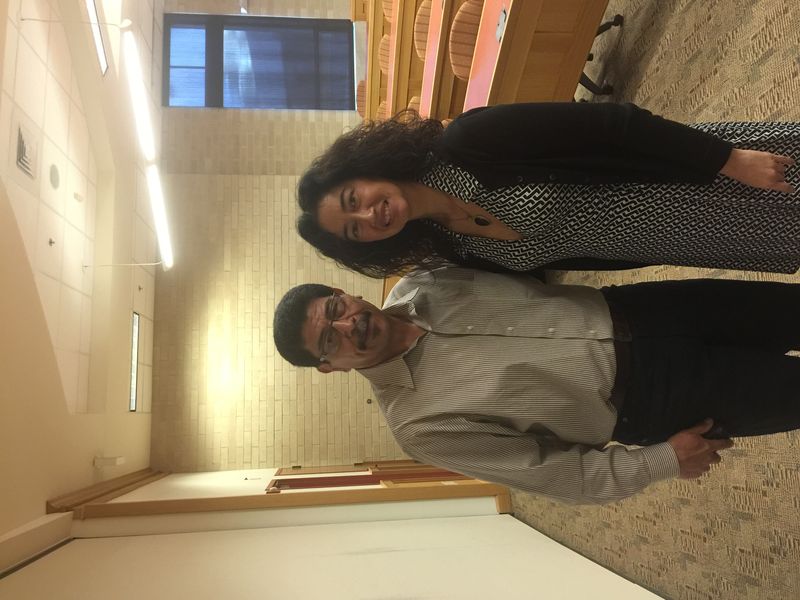
Yolanda Vasquez (one of the attorneys who worked on the briefs in the Supreme Court in Padilla v. Kentucky) Meets Jose Padilla for the first time
Dan Kowalski blogged in detail about the appearance of Jose (or Joe) Padilla of Padilla v. Kentucky at a set of extremely crimmigration events organized by Professors Cesar Garcia Hernandez and Christopher Lasch at the University of Denver Sturm College of Law yesterday. Here is a link to Padilla’s comments and a panel discussion of crimmigration papers by Professor Yolanda Vasquez and Linus Chan.
Mr. Padilla, a retired long haul trucker, was a wonderful participant in the events. The case that bears his name started off with his arrest on marijuana charges; in his presentation in Denver, Padilla said that he did not know the nature of the cargo he was transporting in his truck that led to his arrest in Kentucky.
I had always been curious about the facts of the Padilla’s case. The facts as describe by Justice Stevens in his opinion for the Court in Padilla v. Kentucky did not offer much detail:
“Petitioner Jose Padilla, a native of Honduras, has been a lawful permanent resident of the United States for more than 40 years. Padilla served this Nation with honor as a member of the U. S. Armed Forces during the Vietnam War. He now faces deportation after pleading guilty to the transportation of a large amount of marijuana in his tractor-trailer in the Commonwealth of Kentucky.
In this postconviction proceeding, Padilla claims that his counsel not only failed to advise him of this consequence prior to his entering the plea, but also told him that he “ ‘did not have to worry about immigration status since he had been in the country so long.’ ” . . . . Padilla relied on his counsel’s erroneous advice when he pleaded guilty to the drug charges that made his deportation virtually mandatory. He alleges that he would have insisted on going to trial if he had not received incorrect advice from his attorney.” (footnote omitted).
In an important ruling, the Court held that Padilla had established a claim for ineffective assistance of counsel under the Sixth Amendment for the failure to competently advise him of the possible immigration consequences of the criminal conviction under the plea agreement.
In Denver, Padilla, who seemed quite knowledgeable about his case (especially for a non-lawyer), described how his initial criminal defense attorney convinced him to accept a plea bargain, saying that it was a good deal in light of the gravity of the charges. Padilla was concerned with possible removal resulting from the conviction under the plea arrangement.
KJ