
The Overwhelming Barriers to Successful Immigration Reform
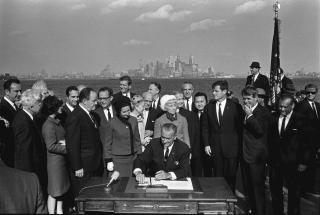
President Lyndon B. Johnson signs the Immigration Act of 1965 at the foot of the Statue of Liberty on October 3, 1965 as Vice President Hubert Humphrey, Lady Bird Johnson, Sen. Edward Kennedy, Sen. Robert F. Kennedy, and others look on. (Photo: Yoichi Okamoto/LBJ Library
Daniel Tichenor in The Atlantic examines the Immigration Act of 1965 as an example of the challenges to the enactment of immigration reform. He begins his analysis as follows:
“Nearly every new American president of the modern era has viewed the nation’s immigration policies as deeply flawed. Yet few of these modern executives have been willing to make immigration reform—one of the most dangerous issues in American politics—central to their agenda. Even fewer have had a measure of success doing so. Even the most dramatic and successful of all—Lyndon Johnson’s landmark 1965 reform—came with high political costs and uneven results. Yet, Johnson’s battle for reform underscores the way immigration policy can be a potent political tool and offers a model for future presidents.”
KJ