
Interview of New Latthivongskorn, DACAmented Medical Student by Gina Verraster, UC Davis Law Student
Earlier this summer the Supreme Court’s ruling in United States v. Texas affirmed the injunction against the Deferred Action for Parents of Americans and Lawful Permanent Residents (DAPA) program and the expansion of the Deferred Action for Childhood Arrivals (DACA) program. The decision does not affect the original DACA program, which grants temporary legal presence, but not permanent legal status, to people who meet eligibility criteria.
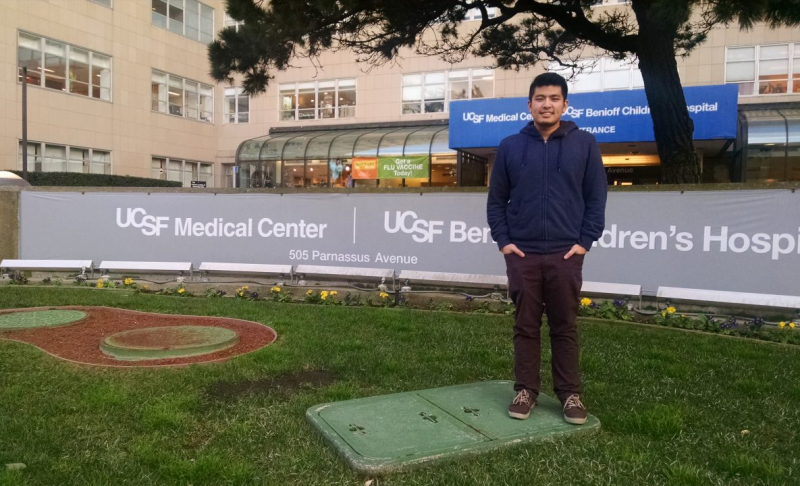
New Latthivongskorn, who has been featured on this blog in the past, is an immigrants’ rights activist and often said to be the first undocumented student to attend the University of California San Francisco (UCSF) medical school; he is a beneficiary of relief under DACA. I caught up with New to discuss his experience with DACA, the aftermath of the ruling in United States v. Texas, and his view on the current state of advocacy for immigration reform. He is entering his third year of medical school and hopes to serve medically underserved communities through the lens of community health and health care policy. According to New, he was able to pursue professional school, in large part, due to DACA. Thus, he said that the Court’s ruling in United States v. Texas was a reminder of what could have been possible for others who would have been eligible for the DACA expansion. Instead, millions of people’s lives have been put on hold.
I asked New about his personal experience and how DACA affected his career path. He called it a “game-changer.” DACA was the “solution to a lot of questions that medical schools were having about undocumented applicants such as clinical rotations and employment at the end of the road.” He said that DACA removes the fear of being deported at any time and one’s day-to-day life is much different because it, at least temporarily, eliminates some barriers like obtaining a driver’s license. As for the doors that DACA has opened at the institutional level, it has enabled people to attend professional school knowing that they will be able to work in their respective fields legally.
The ruling in United States v. Texas combined with the failed immigration reform effort in 2013 forces us to ask what can be done for the approximately eleven million undocumented people living in the United States and contributing to our communities. However, New expressed that the movement continues to move forward and that much can be done at the local level. As an activist, he works with Pre-Health Dreamers, an organization he co-founded, to support undocumented students interested in pursuing health & science careers, and with the Health4All movement to expand health care access for undocumented immigrant communities. In his words, the movement is evolving and, “it is important to keep in mind the bigger picture of where the movement is at,” which is “advocating for everyone, not just DACA and DREAMers.”
While New’s story is special, it is reflective of an experience shared by many that demands our legislators to provide solutions. In the current political climate, there are questions and concerns about the consequences this year’s election will have on immigration law. New will complete medical school and he will continue to “carry [his] community with [him] through whatever [he does] at UCSF” and beyond.
KJ