
September 11, 2001: 15 Years After
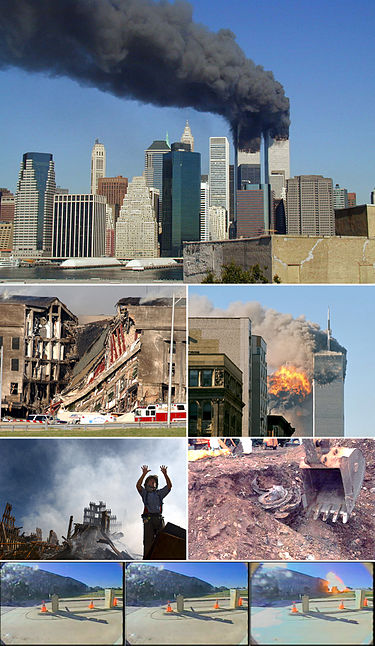
Fifteen years have passed since that fateful morning on September 11, 2001. The tragedy had immediate consequences, with a country and its leaders in grief searching for answers.
The nation saw American law enforcement agencies almost immediately engage in a massive dragnet targeting Arabs and Muslims for law enforcement scrutiny, interrogation, and detention. That day also had long term immigration consequences, including but not limited to special registration (see below) for certain Arab and Muslim noncitizens, greatly increased deportations (mostly on grounds other than terrorist activity), and an increase in state and local law enforcement cooperation with federal immigration enforcement. Such responses resulted from the equation in the minds of many Americans of immigration and national security. Perhaps most visibly, September 11 dramatically transformed the security procedures at American airports. See also here. Willa Frej on Huffington Post reviews with a broad brush some of the long term immigration consequences of September 11.

As it has evolved, Donald Trump’s proposed “extreme vetting” for terrorists builds in certain respects on the special registration program. Upheld by the courts, the National Security Entry-Exit Registration System (NSEERS), or Special Registration, required registration of certain noncitizens within the United States; it was initiated in September 2002 as part of the “war on terror.” Portions were suspended in April 2011. This system had two separate components: port-of-entry registration and domestic registration. In each case, those who register were fingerprinted, photographed, and interrogated. Port-of-entry registration was required for nationals of Iran, Iraq, Libya, Sudan, and Syria (including those that were born in these countries but had a passport from a different country). Certain noncitizens who were in the United States before September 10, 2002, were required to register in person at an Immigration and Naturalization Service office. This procedure was required of males over the age of sixteen who entered the United States legally on particular types of visa (primarily student, work, and tourist) from Iran, Iraq, Libya, Sudan, Syria, Afghanistan, Algeria, Bahrain, Eritrea, Lebanon, Morocco, North Korea, Oman, Qatar, Somalia, Tunisia, the United Arab Emirates, Yemen, Pakistan, Saudi Arabia, Bangladesh, Egypt, Indonesia, Jordan, and Kuwait.
As the Migration Policy Institute summarized, the special registration “program drew criticism from various civil and human-rights groups, members of Congress, and at least one committee of the United Nations. Specifically, NSEERS was censured for its focus primarily on nationals of Muslim-majority countries, its alleged inability to identify terrorist threats, and the strict legal and immigration consequences put in place for participant noncompliance.”
Fortunately, passions generally have cooled since the days immediately following September 11. Still, as we experience a turbulent Presidential campaign with high profile debates over immigration and terrorism, we must take care to avoid policy extremism in the name of national security. Proposals for “extreme vetting” of Muslims seeking admission, or an outright prohibition on their entry, into the United States are the kinds of excesses that are inconsistent with our national commitment to equal justice for all.
President Obama offers remarks on the legacy of September 11 in his weekly address to the nation. In this week’s address, the President marked the 15th anniversary of September 11 and paid tribute to the victims, survivors, first responders, and those who have served our country. The President said that although a lot has changed over the past 15 years, the core values that define us as Americans have remained the same. As Americans we are resilient, we will never give into fear, and we will always look out for one another. Our strength is in our diversity, our welcoming of all talent, and our fair treatment of everyone – no matter their race, gender, ethnicity, or faith. The President said that’s part of what makes our country great – and if we uphold those values, we will carry on the legacy of those we lost and keep our nation strong and free.
KJ