
DOJ Defends Sanctuary Cities Order With New Interpretation
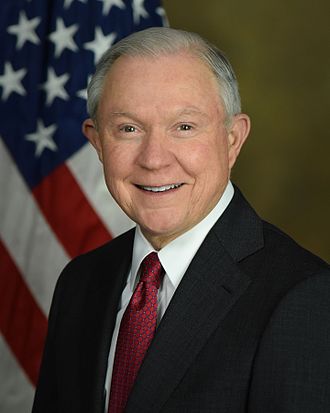
Attorney General Jeff Sessions
At the end of April, U.S. District Judge William Orrick entered a preliminary injunction barring the implementation of Section 9(a) — the anti-sanctuary provisions — of the January 25 Interior Enforcement Executive Order. Melissa Daniels for Law 360 reports on recent developments in that case. The injunction was based on claims that the provisions threatened to withhold federal funding violate the separation of powers doctrine and deprive local governments of their Tenth and Fifth Amendment rights.
Yesterday, the Trump administration asked Judge Orrick to reconsider a decision blocking its executive order over withholding funding from so-called sanctuary cities in the wake of a new interpretation that narrows any affected grants to those from the Departments of Justice and Homeland Security, saying the new guidance erases constitutional concerns.
A memo issued yesterday by Attorney General Jeff Sessions provided a new interpretation of the order and said any withheld funds will only apply to grants from the U.S. Department of Justice or the U.S. Department of Homeland Securities. Then the DOJ filed a motion asking Judge Orrick to reconsider the preliminary injunction in light of Sessions’ new binding guidance, which it argued alleviates multiple constitutional concerns that the court partly based on nonbinding press statements and public speeches. The Sessions’ memo concludes:
“The provisions of the Executive Order quoted above address only 8 U.S.C. § 1373. Separate and apart from the Executive Order, statutes may authorize the Department to tailor grants or to impose additional conditions on grantees to advance the Department’s law enforcement priorities. Consistent with this authority, over the years, the Department has tailored grants to focus on, among other things, homeland security, violent crime (including drug and gang activity), and domestic violence. Going forward, the Department, where authorized, may seek to tailor grants to promote a lawful system of immigration.?
“Many of the court’s determinations regarding plaintiff’s likelihood of success on the merits are based on a reading of the executive order that is inconsistent with the position set forth in the [Sessions] memorandum,” the Justice Department’s motion said. “Under the conclusive interpretation of the executive order set forth in the memorandum, plaintiff cannot establish a likelihood of success on any of its claims. “
The broadly-written executive order signed early on in Trump’s administration directs the withholding of federal funds from sanctuary cities, or municipalities that limit local cooperation with federal immigration agents’ enforcement activity, such as detainer requests from Immigration and Customs Enforcement.
Multiple cities challenged the order, citing millions and even billions of dollars at risk in their local budgets. The California case includes related challenges from San Francisco, Santa Clara County and Richmond, Calif., while Seattle has filed a separate challenge in Washington federal court.
Monday’s memo from Sessions says the goal of the executive order was to instruct DOJ and DHS officials to take certain action within the bounds of their authority — not expand it. It also defined “sanctuary jurisdiction” as local governments that don’t comply with a section of immigration law — section 1373 — that prohibits state and local laws limiting communication with federal immigration authorities.
It further says any threats to grant funding are limited to those administered by the DOJ and DHS, and that the DOJ will ask grant applicants to certify their compliance with section 1373.
The DOJ’s subsequent motion for reconsideration, filed in the Santa Clara County case, said the memo addresses separation of powers concerns because agencies like the DOJ have previously used their congressionally delegated authorities to tailor grants to advance their priorities. It also alleviates the court’s concerns over the spending clause, Tenth Amendment, due process clause and the Fifth amendment vagueness doctrine, the motion said.
Santa Clara County Counsel James Williams on Monday issued a statement saying the Sessions memo does nothing to address the constitutional concerns behind the order.
Some jurisdictions have ramped up efforts to create so-called sanctuary laws since Trump’s executive order was ordered, including Hawaii and Oakland, Calif. And in late March, Maryland’s House of Delegates approved a bill to limit state law enforcement officials’ cooperation with federal immigration enforcement activity, a measure similar to existing laws in New York and San Francisco.
The cases are County of Santa Clara v. Trump et al., case number 3:17-cv-005743:17-cv-004853:17-cv-01535, all in the U.S. District Court for the Northern District of California.
KJ