
Port of Challenges
Guest post by Liza Trazzera, rising 2L at Hofstra University’s Maurice A. Deane School of Law.
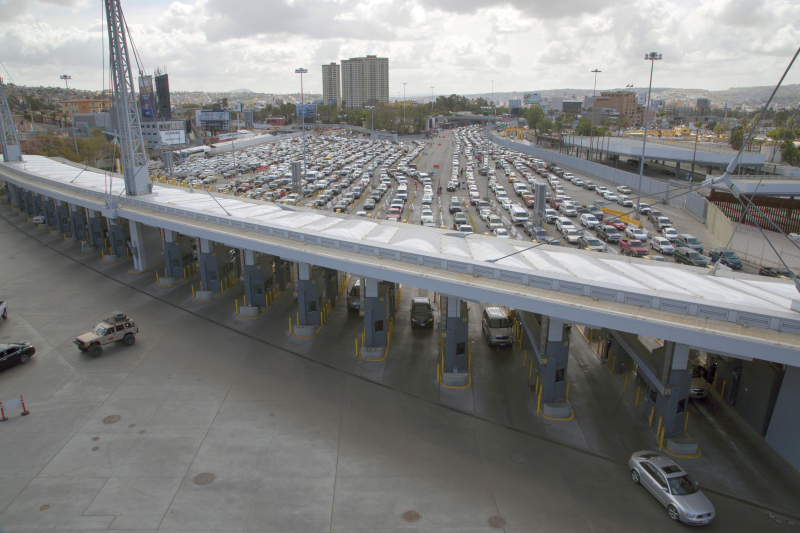
60,000 vehicles per day, 30,000 pedestrians per day, 250 buses per day, 147,000 total people per day, every – single – day. No holidays, no lockdown, no matter what. As I look out upon a sea of cars from the third floor of the San Ysidro Port of Entry, I wonder what it takes to screen these people and vehicles. What does it take to keep the U.S. safe, free from crime, free from narcotics, free from criticism? All while enabling legitimate trade and travel.
The busiest and largest land Port of Entry, connecting San Diego, CA and Tijuana, Mexico. Undergoing an expansive renovation, equipped with dual primary vehicle inspection booths along with a secondary inspection facility. The vehicle lanes to the left are trusted travelers, those who have been vetted and background checked. In the center lanes, those with machine-readable documents. To the right, general traffic, all persons that do not fall into the other lanes. Every person and every vehicle goes through radiation screening. Additionally, a camera takes a picture of the front license plate, rear license plate and an image of the driver. Just under 4% of travelers are subjected to secondary inspection. A shocking average of 7 narcotics seizures per day.
As we spoke to an officer, “there are no shortage of challenges” he said. Another officer, in concurrence speaks about the misconceptions. These officers are not cold-hearted. They are particularly touched by the children that come through unaccompanied. The youngest, 18 months. These officers bring clean clothes from their own homes, their own children, to make sure the unaccompanied children get what they need. They use their own money to buy them DVD videos. They carry a 2-year-old child, who is scared, while they continue to do their job. They follow the letter of the law, often through heart-break, often through sympathy, always through challenges.
-posted by KitJ on behalf of Liza Trazzera