
Refugees and Asylees in the United States
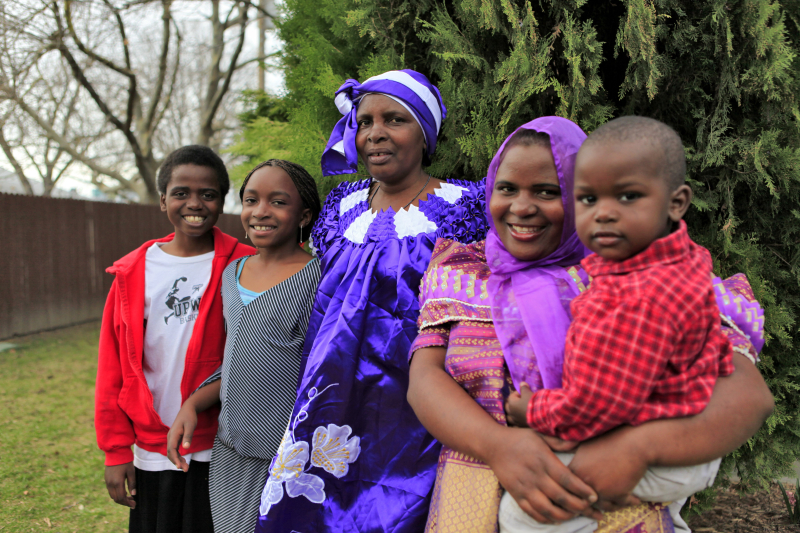
Burundian refugee family outside their home in Boise, Idaho. (Photo: Giuseppe Saitta/IRC)
Spotlight from the Migration Information Source: Refugees and Asylees in the United States
The United States has historically led the world on refugee resettlement, and today remains the top country, having resettled approximately 85,000 refugees in fiscal 2016. It also granted asylum status to more than 26,000 individuals in FY 2015. This article examines characteristics of U.S. refugee and asylee populations, including top countries of origin, states of resettlement, age and gender, and more.
Fewer than 1 percent of formally recognized refugees worldwide are resettled annually, with about 125,600 individuals departing to resettlement countries in 2016. The United States has historically led the world in terms of refugee resettlement, and today remains the top resettlement country. In fiscal year (FY) 2016, the United States resettled 84,994 refugees. Beyond accepting refugees for resettlement from countries of first asylum, the United States also grants humanitarian protection to asylum seekers who present themselves at U.S. ports of entry or claim asylum from within the country; in FY 2015 (the most recent data available), the United States granted asylum to 26,124 individuals.
Global mass displacement reached a record high of 65.3 million people by the end of 2015, according to the United Nations High Commissioner for Refugees (UNHCR). Approximately 21.3 million of these individuals were refugees, 40.8 million were internally displaced persons (IDPs), and 3.2 million were asylum seekers. The ongoing civil war in Syria alone has led 4.9 million Syrians to seek refuge in neighboring countries, most notably Turkey and Lebanon, and caused 6.6 million to be internally displaced.
KJ