
Charlottesville Redux
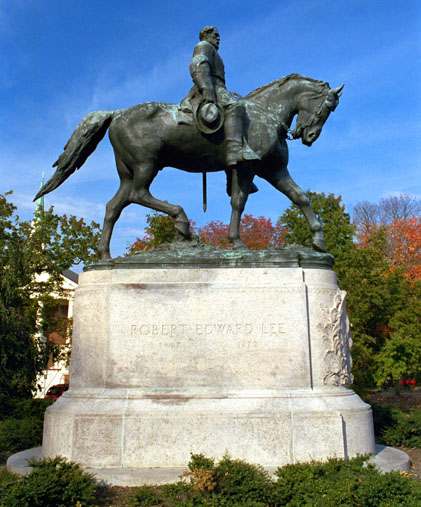
Robert E. Lee Statue, Emancipation Park, Charlottesville, Photo courtesy City of Charlottesville
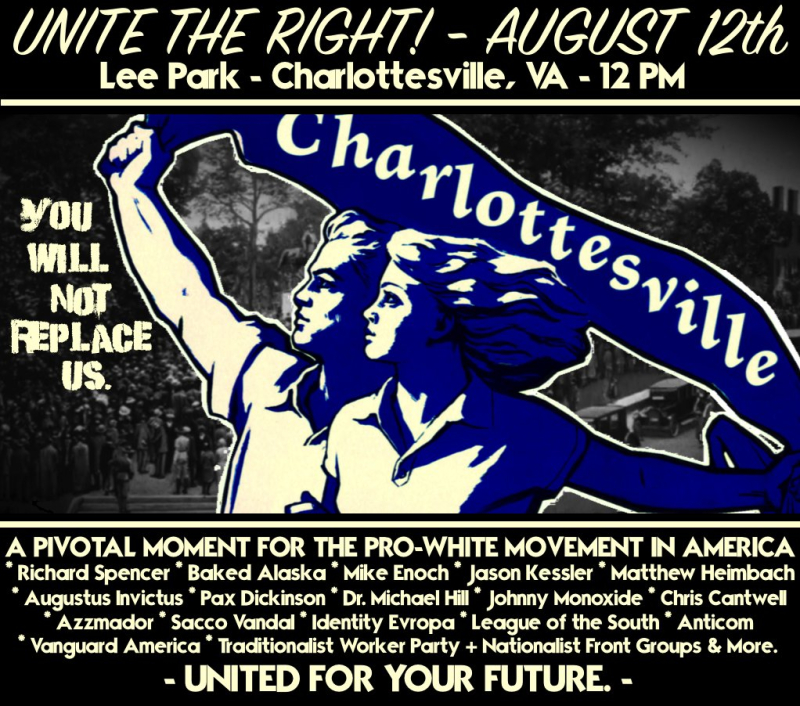
The events in Charlottesville last weekend have shaken the nation. NPR’s Code Switch takes a look at the protests, counter-protests, and what transpired before and after. After a white supremacist rally in Charlottesville spiraled into deadly violence, residents of the Virginia town do some soul-searching.
President Trump continues to provoke controversy as he lays blame to the left as well as the right for the violence in Charlottesville. Some observers, including a professor interviewed on Code Switch, links Trump’s campaign comments about Mexicans as criminals as signaling to white nationalists that racist views are appropriate to share. Others are especially blunt: Trump’s comments about Charlottesville yesterday “not only revealed, again, his remarkable blindness to the racial history and realities of this country, but also showed his willingness to stake out morally indefensible positions as the result of personal pique.”
Thomas A. Saenz, president and general counsel of the Mexican American Legal Defense and Educational Fund responded to President Trump’s comments on the protests as follows:
“Stunning. Terrifying. Unsettling. Pusillanimous. Irrational. Disturbing. But perhaps the most succinct way to describe Donald Trump’s ludicrous press conference performance Tuesday lies in one of his own favorite epithets: SAD.
Yesterday, Donald Trump publicly invited hate to take up residence in the White House. This follows by many months his introducing hate as a guest through appointing white nationalists to high-level posts in his administration.
Equating opposition to the continued exaltation of historical traitors like Robert E. Lee and Stonewall Jackson with opposition to flawed, but heroic, founders like George Washington and Thomas Jefferson is simply insane. Ahistorical blather that also ignores the adoption of Lee and Jackson as icons of racism and exclusion ill befits any leader of this nation.
The implications of yesterday’s display are quite simply monstrous. First, can any person of good conscience continue to serve this president? Second, can any congressperson or senator of good conscience accede to this president’s judgment in policy or appointment? Third, can any judge who adheres to the Constitution fail to strike down as intentional racial discrimination any policy initiated by this president?
The term is sometimes overused, but if we are not already in the terrain of constitutional crisis, we are perilously close.”
Anderson Cooper on CNN had some remarkably harsh comments for President Trump:
KJ