
How the Smithsonian Is Documenting the Work of Immigrant Rights Activists
The Smithsonian Magazine tells of a great new Smithsonian initiative.
In November, 2019, curators from the National Museum of American History attended the U.S. Supreme Court arguments in three cases reviewing the Trump administration’s attempted rescission of the Deferred Action for Childhood Arrivals (DACA) policy. The museum team witnessed the proceedings and protests, and considered how best to capture the moment in material, objects and oral histories, or recordings, which would be housed in the Smithsonian collections.

Among the observers were Nancy Bercaw, curator of political history, curatorial assistant Patricia Arteaga and José Centeno-Meléndez, an oral historian. The three are spearheading the new initiative “New Paths to Change: Undocumented Immigrant Activism, 2000 to the Present,” which is funded in partnership with the Smithsonian Latino Center and the Smithsonian Asian Pacific American Center (APAC). The collection project is an effort to document the stories of undocumented persons, who are participating as community organizers across the nation.
The curatorial team has settled on six different locations to conduct their collecting: Washington, D.C., Southern California (Orange County and Los Angeles), Chicago, Nebraska, North Carolina in the U.S. and Mexico City in Mexico. Each city corresponds to a pattern in immigration and organizing identified in their research. For example, Mexico City is where many who have been deported from the U.S. currently live in large numbers and are organizing to bring awareness to their situation. Traveling to Nebraska will allow the team to highlight the challenges of organizing in a rural state.
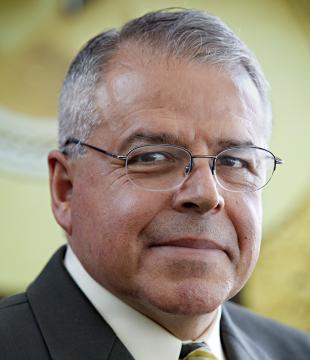

Eduardo Díaz, director of the Smithsonian Latino Center, sees the initiative as part of a larger effort “to transform the Smithsonian into one that better serves the Latino experience and the Latino community. Diaz is a graduate of UC Davis School of Law. He introduced me to several members of the Smithsonian tesam on this project during a visit to Washington last fall. It sounds liuek an exciting project!
KJ