
IOM Releases Guidance for Employers and Businesses on Protection of Migrant Workers During the COVID-19 Crisis
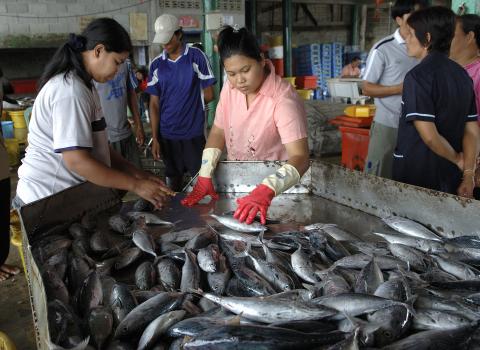
Burmese migrants work on fishing boats and in coastal communities in Phang Nga, southern Thailand. Photo: Thierry Falise/IOM
The private sector, governments and other stakeholders must protect the rights and well-being of the estimated 164 million international migrant workers and their communities around the world, as the number of COVID-19 cases passed 1.3 million, says International Organization for Migration Director General Antonio Vitorino.
Migrant workers are disproportionately impacted by the negative effects of COVID-19 on businesses, including soaring unemployment rates and possible loss of income. It is therefore vital that international brands, their suppliers and other business partners respond comprehensively and collaboratively to the current situation. In doing so, they must recognize their shared responsibility to protect migrant workers and work together with governments towards avoiding costs of economic damages being passed onto workers.
IOM’s guidance document will be updated regularly for the duration of the pandemic.
General principles include:
- All workers should be treated with equality, dignity and respect, irrespective of their gender and migration status.
- The health, wellbeing and safety of all employees, including migrant workers, shall be a priority for employers during this crisis. Businesses must exercise an inclusive approach to their duty of care to respect human rights and meet the basic needs of all employees, especially those related to health.
- Monitor and comply with all requirements established by national and sub-national authorities regarding public health measures and ensure that critical information is communicated to employees.
- Liaise with and seek the support of relevant employer, trade and business associations to share information, learnings and recommended steps to address the crisis through cooperative action.
- Conduct a rapid assessment of existing health, safety, labour and social protection measures at the workplace and in worker accommodation (if relevant) and identify the most pressing needs of employees.
- Focus on gender sensitive measures and tailor your response to the needs of potentially vulnerable groups within your workforce, including migrants.
Please access the guidance at this link.
KJ