
Guest Post: Colorado’s Amendment 76 and Voter Hostility to the Political Participation of Noncitizens in FL, AL by Hunter Knapp
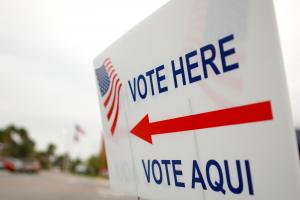
Despite the ongoing uncertainty surrounding the presidential election, three states voted to modify their state Constitutions to codify a “Citizenship Qualification of Voters.” In Colorado, more than 60% of voters approved Amendment 76 which changed the Colorado Constitution from “Every citizen of the United States who has attained the age of eighteen years, has resided in this state for such a time as may be prescribed by law, and has been duly registered as a voter if required by law shall be qualified to vote at all elections,” to “Only a citizen of the United States who has attained the age of eighteen years…” Voters in Alabama and Florida approved similar amendments to their respective constitutions by even larger margins. The Alabama legislature placed that amendment on the ballot, but the passage of Florida’s Amendment 1 and Colorado’s Amendment 76 can be attributed to Citizen Voters Inc.
Despite the framing of Amendment 76, the only impact on the electorate of Colorado will be to silence thousands of young voters who are excited to participate in politics for the first time. In some parts of the country, local laws permit noncitizens to participate in school board and local elections. But that is not the case in Colorado. Colorado state law explicitly requires citizenship to register to vote in state and municipal elections, and no efforts are being made to change that requirement. However in 2019, the Colorado Legislature passed the Colorado Votes Act to empower individuals who are 17 years old at the time of a primary election but who will be 18 years old at the time of a general election can register and vote in the primary election. Colorado legislators recognized the importance of including young people in the democratic process because voting patterns developed at a young age can shape lifetime behavior. According to Colorado Secretary of State Jena Griswold, once given the chance, over 10,000 17-year-old voters participated in Colorado’s 2020 presidential primary election. Suddenly, the Colorado Votes Act can no longer function as intended. In other words, Amendment 76 creates one problem without solving another. So why did Citizen Voters Inc. spend over $1 million to push this initiative in Colorado?
Proponents of Amendment 76 refer to a “noncitizen loophole” that allows noncitizens to vote in “our elections.” Former Republican Colorado state representative Joe Stengel argued the measure is necessary for “voter integrity.” Representative Patrick Neville also argued Amendment 76 would ensure “election integrity.” These arguments are reminiscent of claims of widespread noncitizen voting made by former Colorado Secretary of State Scott Gessler in 2011 that ultimately had to be corrected. More recently, the Presidential Advisory Commission on Election Integrity disbanded without publishing evidence of significant voting by noncitizens only two weeks after a court ordered the Commission to increase its transparency. Although even one fraudulent vote in an election matters, little evidence of noncitizen voting exists nationally and none locally, and Amendment 76 would not create safeguards.
The 2020 election highlighted the potency of debates surrounding immigrant policy and election integrity. Based on the unbridled success of their efforts so far, Citizen Voters Inc. can be expected to continue pursuing a strategy of misinformation to change state constitutions across the nation. Hopefully, voters in other states recognize reject these cynical efforts to increase the divisiveness of U.S. politics.
Hunter Knapp (hunter.knapp@colorado.edu) is a postdoctoral fellow at the University of Colorado Boulder, He graduated from the University of Colorado Law School in 2019.