
Oral Argument in Sanchez v. Mayorkas
Defend TPS, photo by Peg Hunter
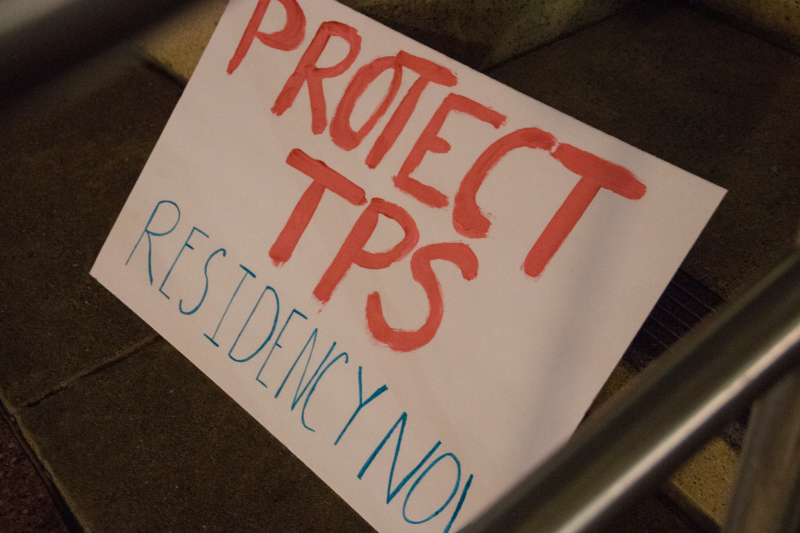
Today, the Supreme Court heard oral argument in the case of Sanchez v. Mayorkas. The case is all about statutory interpretation at the intersection of Temporary Protected Status (TPS) and adjustment of status.
The issue seems simple: are TPS beneficiaries who initially entered the United States without authorization eligible for adjustment of status?
Immprofs know that adjustment is only available to those who have been “inspected and admitted or paroled into the United States.” 8 U.S.C. § 1255. Naturally, for TPS holders who entered unlawfully, they were not inspected and admitted at the border. Still, the petitioners argue that they were effectively admitted by the TPS process, noting that under 8 U.S.C. § 1254a(f)(4), “for purposes of adjustment of status under section 1255 of this title and change of status under section 1258 of this title, the alien shall be considered as being in, and maintaining, lawful status as a nonimmigrant.”
We’ve previously highlighted David Martin’s take on this case, which is something of a side-step around the statutory construction issue. Martin argues that the Biden administration should conclude, as the BIA did, that the statutory language is ambiguous and take the opportunity to exercise its “discretion to adopt a new (and better) interpretation that would permit eligible TPS recipients to make use of adjustment of status to obtain a green card.” (Biden hasn’t done this.)
Writing for ScotusBlog, Maryellen Fullerton describes the lawsuit in the following terms: “Humanitarian, family unity and efficiency goals favor Sanchez and Gonzalez. Reinforcing the penalties for unlawful entry supports the government’s interpretation.”
Reading the transcript of oral argument is absolutely fascinating. Sure there’s the usual tough questions asking attorneys to justify their interpretations of the statutes at issue. (Kavanaugh described the petitioners’ as having “an uphill climb textually speaking.”) I’m more drawn to the revelatory moments that show just how hard and technical immigration can be. Like this moment:
JUSTICE SOTOMAYOR: Counsel, I — I’m sorry, I’m — I’m lost. Aren’t asylum — people who receive asylum, they’re not admitted, but they’re in non-immigrant status, aren’t they?
MS. SAHARIA: No, they’re in asylee status. They are not in non-immigrant status.
This is a question from a justice who genuinely cares about immigration! It’s just hard stuff.
Of course, at the end of the day, I’m just disappointed in the Biden administration. It could have just agreed with petitioners’ interpretation. The statutory language is open to that interpretation. Instead, it is fighting to block a pathway for TPS recipients to formalize their status in the United States. (At the very same time that the administration is supposedly working on the much harder problem of creating new pathways to legalization of TPS recipients in Congress!) I’m reminded of this ever-great tweet from César Cuauhtémoc García Hernández:
I’m ready to start being angry at the president a normal amount. pic.twitter.com/vwpHnNayB6
— César (@crimmigration) November 7, 2020
This is me. Angry a normal amount.
-KitJ