Top Ten Immigration News Stories of 2022
2022 has been an exciting year in immigration law and enforcement. It probably will be most remembered for
(1) the efforts of (and courts’ resistance to) the Biden administration to roll back the Trump administration’s immigration measures; and
(2) the publicity stunts of the governors of Texas and Florida to show that the Biden administration was not effectively enforcing the immigration laws.
Here is the ImmigrationProf top 10 news stories for 2022. By way of comparison, here are the top 10 news stories from 2021.
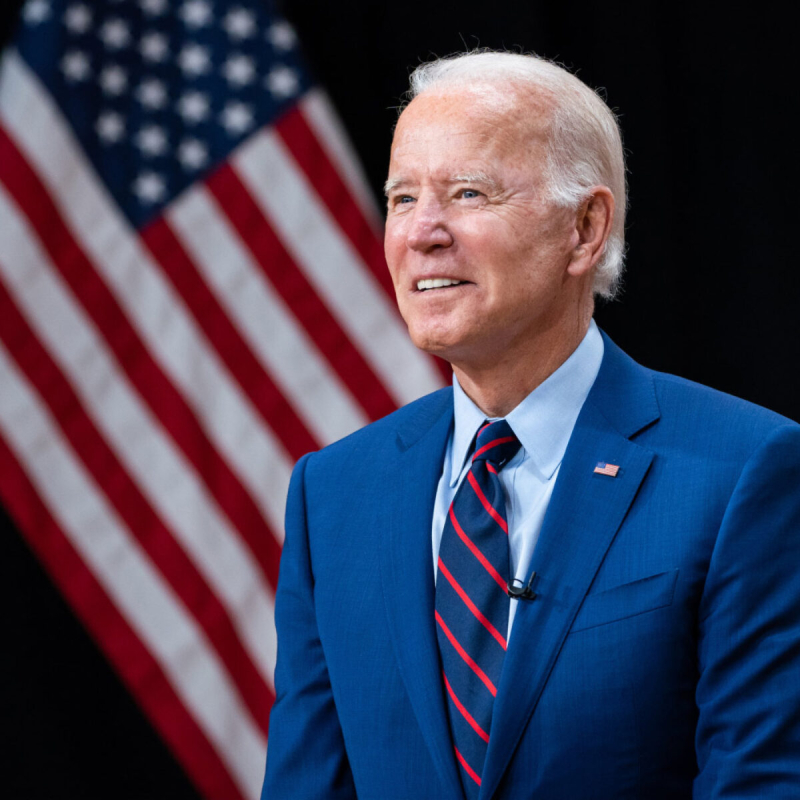
Official White House Photo

Official White House Photo
1. The Biden Administration Faced Fierce Resistance to Rolling Back Trump Immigration Enforcement Measures.
As a public health measure, President Trump had invoked a public health law, Title 42, to expel migrants seeking to enter the country at the U.S./Mexico border. The Biden administration sought to lift the Title 42 order. Some courts and political leaders fiercely resisted the efforts. The Supreme Court earlier this week stayed an injunction requiring an end of the Title 42 order.
It was not only conservatives who questioned the lifting of the Title 42 order. Its termination generated concern among some Democratic Senators. With the Title 42 order slated to end, some Democrats became nervous. As Law360 reported, four Democratic senators pressed the U.S. Department of Homeland Security to answer questions about managing the expected increase in migrants crossing the southern border, with a lifting of the Title 42 order.
The intensity of the worries grew after U.S. District Judge Emmet Sullivan invalidated the Title 42 order as “arbitrary and capricious.” Maria Sacchetti and Spencer S. Hsu for the Washington Post reported on the ruling. The court order and the Biden administration’s attempted announcement the the title 42 order would be lifted, sparked controversy.
Days before the scheduled lifting of the Title 42 order, U.S. Supreme Court Chief Justice John Roberts stayed the court order ordering the end of the Title 42 order. The bottom line: the Trump administration’s Title 42 expulsion order remains in effect.
DHS Announces the End (Finally) to Remain in Mexico Policy, A Court Says No Way
Title 42 was not the only area in which the Biden administration’s immigration initiatives — and roll backs on Trump policies — experienced resistance. Despite the Supreme Court ruling allowing the Biden administration to dismantle the “Remain in Mexico” policy, which allows the return of asylum-seekers to Mexico while their asylum claims are being decided, the policy remained in place. The Department of Homeland Security announced that it would phase out the Trump era Migrant Protection Protocols (MPP) program reported Adolfo Flores for BuzzFeed News. MPP forced thousands of migrants to spend lengthy periods in dangerous conditions in Mexico. It “has endemic flaws, imposes unjustifiable human costs, and pulls resources and personnel away from other priority efforts to secure our border,” noted DHS Secretary Alejandro Mayorkas.
The legal roller coaster over President Trump’s Remain in Mexico policy continues. A trip to the Supreme Court did not end the controversy. Just last week, U.S. District Judge Matthew Kacsmaryk, a Trump appointee, suspended the Biden administration’s termination of MPP.
There have been many other challenges to the Biden administration’s immigration policies. The Title 42 and Remain in Mexico battles offer an idea of the magnitude of the resistance and the administration’s inability to reverse signature Trumpian immigration measures.
2. State Governors Protest the Alleged Lack of Federal Immigration Enforcement by Transporting Migrants North
Texas Governor Greg Abbott and Florida Gover Ron DeSantis in 2022 repeatedly engaged in publicity stunts that showed utter disregard for the plight and humanity of migrants who have come to the United States. That included the extraordinary step of busing migrants to New York City, Washington D.C., and Chicago.
Governor DeSantis’s transportation of a group of migrants to Martha’s Vineyard in Massachusetts, a tourist destination of the rich and famous, attracted the most attention. See Class Action: Migrants Say Florida Governor DeSantis “Stranded” Them on Martha’s Vineyard. A lawsuit followed Governor DeSantis’s Massachusetts adventure. Law360 reported on the suit by asylum-seekers alleging that they were tricked into boarding flights to Martha’s Vineyard — and left them stranded there — in violation of their constitutional rights.
Immigrants land on Martha’s Vineyard; Florida Governor takes credit
In line with the Governor DeSantis playbook, Texas Governor Greg Abbott made federal immigration enforcement a re-election campaign issue. See Texas Governor Now Busing Migrants to Chicago as well as DC and NYC. He sent migrants by bus from Texas to Washington, D.C. , New York City, and Chicago. See Texas Governor Busing of Migrants to NYC and DC Keeps Him in the News. NPR reported that “New York City Mayor Eric Adams . . . criticiz[ed] Texas Gov. Greg Abbott for sending busloads of migrants to the city, saying that Abbott `used innocent people as political pawns to manufacture a crisis.'” (bold added).
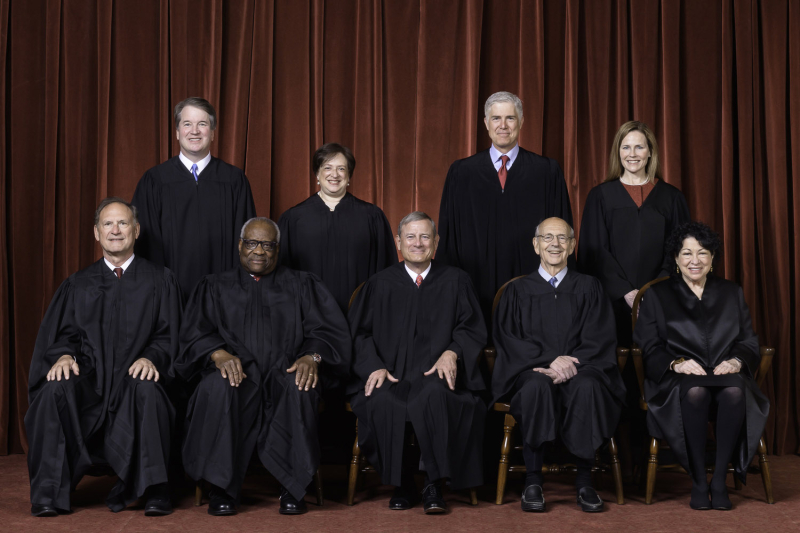
On the last day of the 2021 Term, Associate Justice Stephen Breyer retired and the first African American woman Justice, Ketanji Brown Jackson, was sworn in to replace him. During her confirmation hearings, Judge Jackson was quizzed on expedited removal ruling. Here is a review of the Immigration Record of Judge Ketanji Brown Jackson, President Biden’s Supreme Court Nominee.
With the retirement of Justice Stephen Breyer, the Court lost the author of a memorable majority opinion in Zadvydas v. Davis (2001), which reasoned that the prospect of indefinite detention of a noncitizen would raise “serious” constitutional questions. He wrote “[b]ased on our conclusion that indefinite detention of aliens . . . . would raise serious constitutional concerns, we construe the statute to contain an implicit `reasonable time’ limitation, the application of which is subject to federal-court review.” Contrary to the teachings of the plenary power doctrine, which directs the courts to defer to the immigration judgments of the President and Congress, Justice Breyer did not show special deference to the U.S. government’s immigration decision in that instance. Zadvydas v. Davis has undermined the decision in recent years.
3. Tragedy in San Antonio. Deaths on the Border Continue
A tragic mass death of migrants being trafficked in a truck/trailer into the United States in San Antonio shocked the nation, reminding us of the deadly consequences of contemporary migration flows. See Death on the Border Chapter 101: 46 Migrants Reported Dead in Truck/Trailer in San Antonio, Texas. In a statement on the tragedy, President Biden acknowledged that the event may be “the deadliest people smuggling tragedy in recent U.S. history.”
The San Antonio deaths are the tip of the iceberg. Border deaths are a regular part of U.S./Mexico border life and are an international phenomenon as well. See IOM Report: More Than 50,000 Migrant DeathsCNN: A record number of migrants have died crossing the US-Mexico border.

Photo of Mexico–United States barrier near Tijuana, Mexico. The crosses represent migrants who have died in attempts to cross the border. Photo courtesy of Wikimedia Commons
Deaths of migrants along the U.S./Mexico border have made the news for years. See, for a few examples, here, here, here. The death toll continues to mount. Earlier this year, CNN reported that nearly 750 migrants have died at the U.S./Mexico border this fiscal year, a new record, according to Department of Homeland Security figures. Migrants often face treacherous terrain when crossing the border – including oppressive desert heat, dangerous waters, and falling from the border wall.
4. President Trump Announces 2024 Run for President

Official White House Photo
Can you believe it? Donald Trump announced his 2024 run for President. On the same day that a federal court found that his administration’s extraordinary Title 42 order was arbitrary and capricious, Donald Trump announced that he would again run for President. He made it clear that immigration enforcement would be a major plank in his platform. President Trump, of course, took the most aggressive enforcement measures of any modern U.S. President.

Flag of Ukraine from Wikimedia Commons
5. The World Welcomes Ukrainian Refugees Flee the Russian Invasion
The Russian invasion of Ukraine led to a mass migration of refugees. European nations embraced them with open arms. A number of posts on the ImmigrationProf blog (and here) have highlighted the differential treatment of Ukrainian refugees and those from Syria, Afghanistan, and Central America. Voice of America released a report entitled “Immigration Experts Contrast US Support for Ukrainian, Afghan Refugees.” Here are a few more stories on the treatment of Ukrainian refugees:
Ukrainian refugee crisis already ranks among the world’s worst in recent history
Refugee Double Standard: What the Global Response to Ukrainian Refugees Teaches
Welcome for Ukrainians reveals ‘hypocrisy’ of Irish immigration system?
“Fortress Europe” opens for Ukrainian refugees but keeps others out
Ukrainian Refugees and Racism
Political and economic turmoil in Venezuela led to a flow of migrants from that South American nation. See Migrants from Venezuela, Nicaragua and Cuba are driving apprehensions at the U.S./Mexico borderAP — US officials: Border crossings soar among Venezuelans.
Consistent with other news reports (and here), CNN reported that U.S. government data showed that “[i]n August alone, immigration agents encountered more than 203,000 individuals at the southern border. Migrants from just three countries – Venezuela, Nicaragua and Cuba – made up about 56,000 of those encounters, or about 28 percent . . . .” The increase in migration from these three nations reduced the share of migrants coming from Mexico and Central America.
7. Top Trump Advisor Steve Bannon Arrested for Fraud in Connection with Fundraising to Build a Border Wall
At one time a top Trump advisor, Steve Bannon in September surrendered on New York state fraud charges related to fundraising to build the wall along the U.S./Mexico border. The state charges are based on the same conduct that Bannon was charged with by federal prosecutors in 2020. Then-President Donald Trump pardoned Bannon on the federal fraud charges. Presidential pardons do not apply to state charges. The prosecution is pending.
9. UK’s Policy of Shipping Asylum Seekers to Rwanda Challenged
Prince Charles Photo courtesy of Wikimedia Commons
The following news story did not get the attention in the United States that it deserves. Kit Johnson blogged about the United Kingdom’s extraordinary decision to ship asylum seekers to Rwanda. Yes, Rwanda. Click here for an Associated Press discussing how the policy operates. The controversy over the policy continues. Rwanda, really?
10. The Holy Grail? Immigration Reform. Forget About It.
Official Congressional Photo of Senator Kyrsten Sinema
Congress discussed at various times the possibility of long-awaited immigration reform. A possible proposal briefly made the news as the lame duck Congress moved toward the end of 2022. See Is There a Possibility for Bipartisan (and Limited) Immigration Reform?
The recent chatter about the possibility of bipartisan immigration reform has dissipated. Senators Kyrsten Sinema, who recently left the Democratic Party to become an Independent from Arizona, and Thom Tillis (R-NC), floated a framework for immigration reform. It would have provided legal status for young undocumented immigrants and appropriations for additional border security. To this point, reform has not come. Forget about it.
Milestones
1. UC Hastings Law Center on Race, Immigration, Citizenship, and Equality
ImmigrationProf blogger and Professor Ming Hsu Chen this fall launched a center at UC Hastings that will pursue research on equality issues and collaborate with other scholars and academic institutions. Chen previously founded the Immigration and Citizenship Law Program at the University of Colorado.
The Center on Race, Immigration, Citizenship, and Equality (RICE) will offer lectures, conferences, panel discussions, research projects, student employment opportunities, and law classes with fieldwork components. It will promote scholarly engagement and forge links between other centers at UC Hastings, including the Center for Gender and Refugee Studies and the Center for Racial and Economic Justice.
2. Passing of Immigration Law Professors
Legal academia in 2022 lost two wonderful and influential immigration law professors.
Funeral Services for Professor Michael OIivas: RIP Michael Olivas Immigration Scholar
Photo courtesy of the University of Houston Law Center
We lost an influential immigration scholar Professor Michael Olivas. He had been honored in 2010 as this blog’s Immigration Professor of the Year. Professor Olivas was an influential immigration law scholar and a leading figure in legal education. One strand of Professor Olivas’s vast body of scholarship focused on issues at the intersection of immigration and Latina/o civil rights. He also was a wonderful immigration colleague and organized the inaugural Immigration Law Teachers workshop in New Mexico in 1992.
We also lost another wonderful person and influential immigration law professor, Anna W. Shavers, Cline Willliams Professor of Citizenship Law and associate dean for diversity and inclusion at the University of Nebraska College of Law. She was simply the most decent person one could ever want to meet. And she was an important immigration scholar. Here is the University of Nebraska’s statement on Professor Shavers’s passing.
3. Welcome Austin Kocher, New ImmigrationProf Blogger
In January, the ImmigrationProf blog announced the addition of blogger Austin Kocher, Research Associate Professor for the Transactional Records Access Clearinghouse. Check out his profile. TRAC is a research institute that uses Freedom of Information Act requests to study the federal government.
Sports Page
Immigrants made the sports pages in 2022. Here are a few headlines:
1. Immigrants and the World Cup
Argentina beat France in the finals on penalty kicks and took home the World Cup. Migrant labor, with abuses reported, made the World Cup possible in Qatar. Some may be surprised that many of the soccer players were not born in the country that they represented in the competition.
2. Game, set, match: Novak Djokovic loses visa appeal, leaves country ahead of Australian Open
3. Boston Celtic Changes Name to Freedom, calls becoming U.S. citizen “unforgettable”
At the very end of 2021, a National Basketball Association Boston Celtics player changed his name from Enes Kanter to Enes Kanter Freedom in celebration of becoming a U.S. citizen. He said that taking the citizenship oath was “maybe the most unforgettable moment that I had in my life.” An immigrant from Turkey, Freedom has been an outspoken critic of President Recep Tayyip Erdoğan and the Turkish government. NPR interviewed Freedom about why he changed his name and his support for a boycott of the Olympics in China.
Society Page
An immigrant with expensive tastes, a propensity for con jobs, and the subject of a hit Netflix series, faced removal from the United States. See Inside fake German heiress Anna Sorokin’s immigration battle.
The immigration case of Anna Sorokin, whose elaborate fraud captured the world’s imagination, continues. The subject of the hit Netflix series “Inventing Anna“, Sorokin served about four years in prison after found guilty of criminal charges. She had claimed to be a German heiress named Anna Delvey who had a $60 million inheritance and was raising funds to launch a Manhattan social club. Sorokin swindled hundreds of thousands of dollars from friends, banks and New York City luxury hotels to fund a lavish lifestyle.
KJ