
Immigration in the Supreme Court, 2022 Term
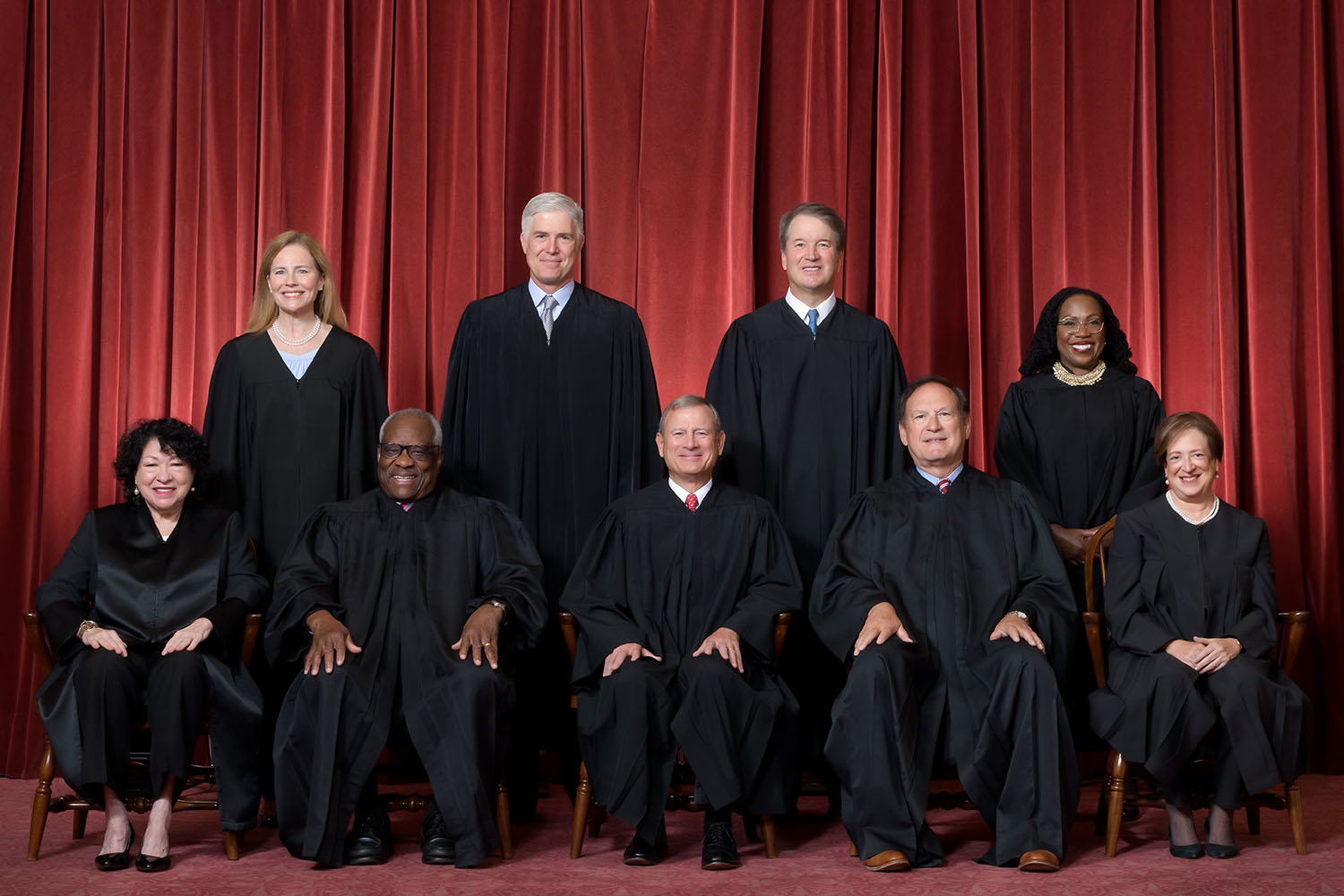
Writing for the majority, Justice Kavanaugh emphasized that “[t]he States have brought an extraordinarily unusual lawsuit. They want a federal court to order the Executive Branch to alter its arrest policies so as to make more arrests. Federal courts have not traditionally entertained that kind of lawsuit; indeed, the States cite no precedent for a lawsuit like this.”
Amy Howe for SCOTUSBlog summarized the decision as follows:
“In a major victory for the Biden administration, the Supreme Court . . . ruled that Texas and Louisiana do not have a legal right, known as standing, to challenge a Biden administration policy that prioritizes certain groups of unauthorized immigrants for arrest and deportation. The justices therefore did not weigh in on the legality of the policy itself, instead reversing a ruling by a federal district court in Texas that struck down the policy. The vote was 8-1. Justice Brett Kavanaugh wrote for a majority. . . . Justice Neil Gorsuch wrote an opinion in which he agreed that the states lacked standing, but for a different reason; his opinion was joined by Justices Clarence Thomas and Amy Coney Barrett (who wrote her own concurring opinion, joined by Gorsuch).
Justice Samuel Alito was the lone dissenter. He complained that the court’s decision left states `already laboring under the effects of massive illegal immigration even more helpless.’
The policy at the center of . . . United States v. Texas, was outlined in a . . . memorandum by Secretary of Homeland Security Alejandro Mayorkas. The memorandum explains that because the Department of Homeland Security does not have the resources to apprehend and deport all of the more than 11 million noncitizens who could be subject to deportation, immigration officials should prioritize the apprehension and deportation of three specific groups of people: suspected terrorists; noncitizens who have committed crimes; and those caught recently at the border.” (bold added).
The Court went to some length to make it clear that its holding does not affect the ongoing challenges by several states to the lawfulness of the Deferred Action for Childhood Arrivals policy. As the National Immigration Project stated in a “practice advisory” to United States v. Texas,
“[t]he decision may have broader implications on states’ standing to challenge federal immigration policies, but the Court repeatedly noted that its decision is limited to the context of enforcement discretion over arrests and prosecutions. The Court explained that it does not reach questions regarding standing to challenge provision of legal benefits (such as DACA) or detention of noncitizens who have already been arrested.” (bold added).
Secretary of Homeland Security Alejandro N. Mayorkas released the following statement on the Court’s ruling in United States v. Texas: “We applaud the Supreme Court’s ruling. DHS looks forward to reinstituting these Guidelines, which had been effectively applied . . . to focus limited resources and enforcement actions on those who pose a threat to our national security, public safety, and border security. The Guidelines enable DHS to most effectively accomplish its law enforcement mission with the authorities and resources provided by Congress.”
On the same day that it decided United States v. Texas, the Court decided United States v. Hansen. The two decisions were the final immigration decisions of the Term.
The U.S. government prosecuted Helaman Hansen for promising noncitizens a path to citizenship through “adult adoption,” a form of relief that does not exist under the law. 8 U.S.C. §1324(a)(1)(A)(iv) makes it unlawful to “encourag[e] or induc[e] an alien to come to, enter, or reside in the United States, knowing or in reckless disregard of the fact that such coming to, entry, or residence is or will be in violation of law.” Hansen challenged the law as overbroad in violation of the First Amendment. The Ninth Circuit agreed. The Supreme Court in 2020 had been presented the same First Amendment issue (United States v. Sineneng-Smith) but had disposed of the case on procedural grounds.
In a 7-2 decision authored by Justice Amy Coney Barrett, the Court reversed, finding that the law does not prohibit a substantial amount of protected speech and does not violate the First Amendment. Justice Ketanji Brown Jackson dissented, in an opinion joined by Justice Sonia Sotomayor. The dissent states:
“At bottom, this case is about how to interpret a statute that prohibits `encourag[ing] or induc[ing]’ a noncitizen `to come to, enter, or reside in the United States’ unlawfully. . . . The Court reads that broad language as a narrow prohibition on the intentional solicitation or facilitation of a specific act of unlawful immigration—and it thereby avoids having to invalidate this statute under our well-established First Amendment overbreadth doctrine. But the majority departs from ordinary principles of statutory interpretation to reach that result. Specifically, it rewrites the provision’s text to include elements that Congress once adopted but later removed as part of its incremental expansion of this particular criminal law over the last century.”
4. Criminal Removal for Obstruction of Justice: Pugin v. Garland (consolidated with Garland v. Cordero-Garcia)
U.S. government wins.
The issue is these cases was whether, to qualify as “an offense relating to obstruction of justice,” 8 U.S.C. § 1101(a)(43)(S), an offense must have a nexus to a pending or ongoing investigation or judicial proceeding? The issue is of practical immigration significance because an “offense relating to the obstruction of justice” is among the criminal convictions that are classified by the immigration statute as an “aggravated felony” subjecting noncitizens to mandatory removal from the United States.
Justice Kavanaugh delivered the opinion of the Court, in which Chief Justice Roberts and Justices Thomas, Alito, Barrett, and Jackson joined. Justice Jackson filed a concurring opinion. Justice Sotomayor filed a dissenting opinion, which Justice Gorsuch joined, along with Justice Kagan (except for Part III). The majority held that a criminal offense may “relat[e] to obstruction of justice” under the statute even if the offense does not require that an investigation or proceeding be pending. The Court observed that obstruction of justice is often “most effective” when it prevents “an investigation or proceeding from commencing in the first place.”
The bottom line of the SCOTUSBlog analysis of the decision by is that “the majority’s decision in Pugin opens the door for the government to argue that an ever-expanding array of crimes warrant deportation.”
Case Dismissed from Merits Docket