
Key facts about U.S. Latinos for National Hispanic Heritage Month
Jens Manuel Krogstad, Jeffrey S. Passel. Mohamad Moslimani & Luis Noe-Bustamante for the Pew Research Center provide some basic facts about Latina/os that I found interesting:
The U.S. Hispanic population reached 63.6 million in 2022, up from 50.5 million in 2010.
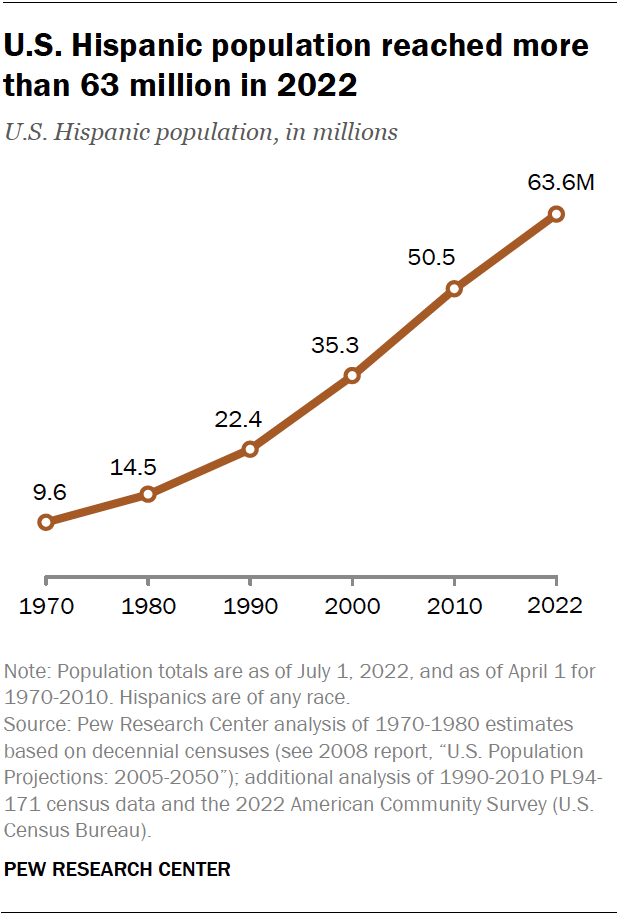
Hispanics have played a major role in U.S. population growth over the past decade.
The number of Latinos who say they are multiracial has increased dramatically.
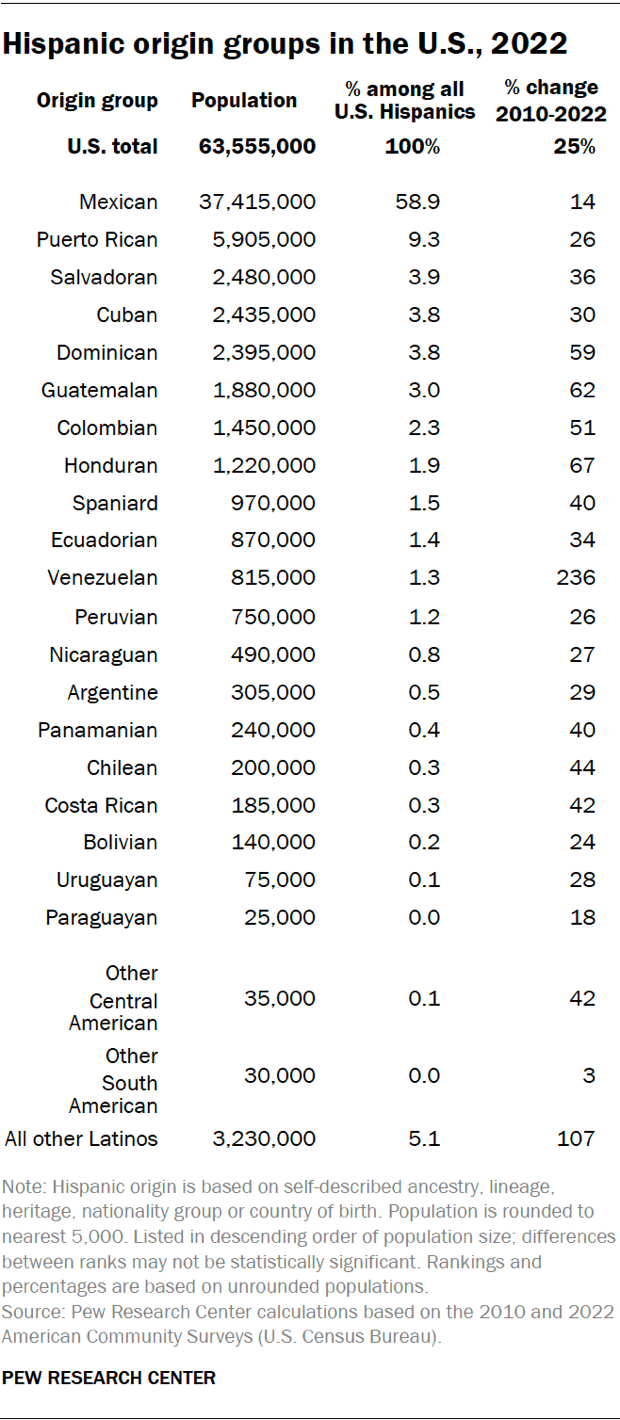
The roughly 37.4 million people of Mexican origin in the U.S. represented nearly 60% of the nation’s Hispanic population in 2022.
Puerto Rico’s population has declined by about 500,000 since 2010, from 3.7 million to 3.2 million.
Venezuelans have seen the fastest population growth among U.S. Latinos.
Hispanics are the largest racial or ethnic group in California and Texas.
Three states’ Hispanic populations increased by more than 1 million from 2010 to 2022. Texas (2.5 million increase), Florida (1.8 million) and California (1.6 million) accounted for almost half of the growth nationwide since 2010.
North and South Dakota’s Hispanic populations have grown the fastest since 2010.
The makeup of the U.S. Hispanic population varies widely across major metropolitan areas.
Catholics remain the largest religious group among Latinos in the U.S., but they have become a smaller share of the Latino population over the past decade.
Newborns, not immigrants, have driven the recent growth among U.S. Hispanics.
The share of Latinos in the U.S. who speak English proficiently is growing.
The share of U.S. Hispanics with college experience has increased since 2010.
Four-in-five Latinos are U.S. citizens.
KJ